





With: Maaren A. Shah and Luke Nikas
Quinn Emanuel Partners
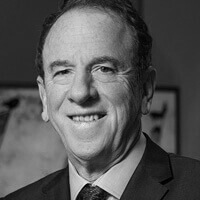
Host: John B. Quinn
Founder and chairman, Quinn Emanuel Urquhart & Sullivan
Share this episode:
Episode transcript:
Note: This transcript is generated from a recorded conversation and may contain errors or omissions. It has been edited for clarity but may not fully capture the original intent or context. For accurate interpretation, please refer to the original audio.
JOHN QUINN: This is John Quinn and this is Law, disrupted. And today we’re gonna be talking about a litigation relating to a famous artist Robert Indiana, who’s best known for his Love sculpture. Many of you will have seen this. It’s the letters L-O-V-E of love, which letter is tilted? Remind me. I am with Luke Nikas and Maaren Shah. It’s the E at the end that’s tilted?
LUKE NIKAS: It’s the O.
JOHN QUINN: The O in the middle.You see, that’s why I’m not an artist. I would’ve thought you’d tilt the letter at the end. But when I think of it, I know it’s a very famous sculpture. I think of it on Sixth Avenue, on about 55th Street. Is that where it is, is it close enough?
LUKE NIKAS: And then at Rockefeller Center last year.
JOHN QUINN: Yeah. Robert, and this is a saga, folks, and we’re going to try to develop a through line here and give some shape to the story. But, some of the themes here are, yes, artists. There’s a long tradition and history of artists being taken advantage of by the people around them. In representing an artist, you have to think about obviously the artist’s property rights, their copyright and their ownership of their works. But you also have to think about their place in the marketplace. What needs to be done in order to protect that place in the marketplace. Because art needs to market, artists need reputations and litigation for good or for ill. I should say that my partners who we’re talking to, Maaren and Luke, have almost, I think without question, the premier arts disputes practice in the world.
They’ve done work for leading institutions, galleries, and artists. And we’re going to be talking just about one case or series of cases relating to Robert, Indiana, but we have, they have many different stories that could tell you emanating from the art world and the art business. So let’s get started on this saga. Let’s begin with Luke. How did this case come to you and what was it presented as the initial problem?
LUKE NIKAS: So the initial problem presented by the longtime advisor to Indiana who held the copyrights trademarks and the right to fabricate with Indiana, his famous love sculpture among others, was there was a guy in the marketplace named Michael McKenzie, who was making work that the client believed was not authentic and believed violated their right to make Indiana’s works exclusively.
And so the original question was, can we file a copyright infringement lawsuit to stop this from happening? And we started to dig in and look at what McKenzie was doing, where he was selling these works. The emails back and forth between Indiana, seemingly Indiana and the client. What we started to uncover is that this was not just one individual making works that infringed our client’s rights.
It was an effort between multiple people to isolate Indiana from his friends, from his studio assistants, who had been working with him for many years, from his relationships with museum directors, and most important from our client, who supported his entire art making operation. And the goal was, let’s isolate him.
Let’s take over his art making. Let’s take over his brand, his reputation, and let’s make as much money as possible to the exclusion of everybody else around.
JOHN QUINN: And where was his career, his reputation, his physical situation? Where was he in his life? Was he vulnerable?
LUKE NIKAS: So at this point, Indiana was in his late eighties. He was physically deteriorating and living in an island house on an island off of Maine called Vinalhaven. So it was a very isolated house in an isolated place in a state of frailty.
His career was up and down over the years. It had gone way up in the sixties when he made the famous love sculpture, and then it went way down when people associated him with cheap chairs, you know, key rings and t-shirts, and not as a serious artist. Then our client brought it back up again only to see it start to decline when McKenzie and the people around Indiana that McKenzie had worked with had started pushing out works that weren’t consistent.
So he was in a very vulnerable place at the time.
JOHN QUINN: And so what happened, Maaren, they approached you with the idea of bringing a copyright infringement case. Is that what you did or did you do something else?
MAAREN SHAH: We did that and more, John. And I think, you know, as Luke said, and as you said at the top of the podcast, when you’re dealing with an artist who has a recognizable name and a recognizable career, and you’re dealing with kind of, you know, a man, who is in a state of frailty in a late portion of his life, portion of his career, objective.
From our clients who had known him and worked with him, you know, personally for decades, was both to protect the artist personally, because they feared that it, you know, he was in such a state of vulnerability and had been so cut off from the world and from friends and supporters, that they feared for his physical safety.
It turns out for good reason, as he ended up dying the day after we ultimately filed the complaint, having not seen many of his friends and longtime supporters in weeks or months by that point. And to make sure to protect, you know, his, as you said, place in the market, his legacy, his place in history, ultimately, because he’s a very important artist in the American canon.
And so along with the idea of a copyright infringement and trademark infringement, and IP kind of rights protection lawsuit, we ultimately also filed claims for breach of contract having to do with the right to fabricate his works. And for tortious interference with contract, based on the making of works that were, you know, infringing is the loose word for it, but essentially interfering with our client’s exclusive rights to fabricate certain more recognizable works.
There are kind of two issues there, right? One is the IP, technically the IP copyright. Trademark side of things. And then when you have an artist like Indiana who has a very robust market in monumental sculptural works, or additional works, which he did, there’s also, apart from the intellectual property rights, the right to fabricate, and what is ultimately deemed an authentic or inauthentic work.
And so we pursued a host of claims. The people who, you know, our client felt had isolated him, and had taken advantage of his market and were infringing on his IP and, fabrication rights and our client’s rights. As it turned out, he died the day after we filed our lawsuit. And that ultimately brought in the estate.
You know, his estate and the ultimate beneficiary of his estate, which was a foundation that he had sought to have set up after his death. And that, for a while, massively complicated the case and the issues that we were dealing with.
JOHN QUINN: Luke, tell us about that.
LUKE NIKAS: So, when we sued the individual who was working with MCKenzie, that individual was the power of attorney for Robert Indiana.
That power of attorney had been switched during a time when we heard from some witnesses, Indiana was not in the state of mind to be able to sign a document like that, so it was Mackenzie and this individual and the, as the power of attorney, when Indiana died, the estate came into the picture and the estate was being managed by a personal representative or an executor who lived in Vinalhaven had done, or off the island of Vinalhaven, but nearby and had done in some of Indiana’s real estate transactions. That individual, along with the power of attorney, had set up a foundation for Indiana that was set to receive a hundred percent of the royalties. Indiana was paid, so this would be the repository of all assets Indiana had.
It was convenient that the personal representative would be on the board of that foundation and the power of attorney who had isolated Indiana would be the director or the executive director of the foundation. And so we pretty quickly saw that what was going on was these people were trying to isolate our client so they could direct all the royalties to this foundation, which they would be in charge of.
And then they’d cancel all of Indiana’s contracts with our client and they would take over the empire entirely. And so we saw very quickly, that’s what the estate came in and tried to do. So the estate sent letters canceling our client’s contracts, which was the sole basis on which they had a business.
They demanded that our client turn over its entire inventory of the Indiana artwork they had fabricated. An extraordinary inventory, the most significant inventory of Indiana artwork in the world by a mile, and said, we are not only going to demand that you cease to exist as a business partner, but we’re also suing you alleging breach of fiduciary duty, skimming off the top, accounting fraud, and a whole host of other claims.
And so we had the case against McKenzie and the power of attorney. Then we had the estate come in and sue our client for various things, and then we had a whole separate set of conduct canceling the contracts that we believed was unlawful. So we had to sue them back. And then when the estate started to get up and running, they initiated a probate proceeding in Maine and an arbitration against McKenzie based on our allegations of McKenzie.
So we had main probate proceeding, arbitration, our lawsuit against McKenzie, the estate’s lawsuit against us, our lawsuit against the estate, and then another lawsuit against the estate based on the intervening conduct in three different venues.
JOHN QUINN: So Maaren, this very quickly became extremely complicated.
MAAREN SHAH: It definitely did. And again, you know, our primary objective when we filed the first complaint was to protect the man and protect his art market as against someone we believed was making infringing works. Now all of a sudden you have a much bigger problem after he died. When you have an estate, a foundation, you still have the art infringer.
And keep in mind that during this whole time, of course, when an artist of repute dies there’s a dispute over who controls the estate, who controls the inventory of artwork, are there authenticity issues? Can you trust what’s on the market? All of this has quite a depressive effect on the artists immediate market, if not also his legacy.
And so the thing that we set out to protect when the artist was alive, quickly devolved into a much bigger problem, that was impacting his market and legacy kind of quite a bit across the board. And so as we proceeded now in this new, you know, this new world order that we’d kind of inherited after the artist died, our primary focus shifted really, to deal with any issues that our clients had vis-a-vis the estate and the personal representative, and ultimately the artist foundation because that very quickly became more of the primary long term issues that we needed to solve in order to protect our client’s rights and the artists’ ultimate market and legacy for the long term.
It kind of leaked into the forefront even, you know, as against, the infringing activities of the original defendant, which is what we had set out to.
JOHN QUINN: You now are dealing with the estate on the other side. You have five or six legal proceedings going on. At that point you must have felt a little bit on your back foot and trying to figure out how are we gonna navigate this. Luke, is that, and that when you went into it, that’s not really what you were bargaining for.
LUKE NIKAS: We definitely weren’t bargaining for almost any of this. And not only did we feel on our backfoot and needed to quickly figure out a strategy legally, but we also had the reputational issue to deal with because in the art world, the estate of an artist, no matter how little they may know about the artist’s work and no matter how little of the artist’s work they might actually own, they are perceived as the ones with the authority. Yeah.
So the estate was going out in the world telling people we are now the estate of Robert Indiana. We are the ones you look to the marketplace for guidance on all issues related to Indiana.
So not only did our clients have an issue with is their business gonna be terminated, complete? Are they gonna be pushed out of the market? Are their rights over? But they had a question of, in the meantime, can we preserve our reputation as the people with the knowledge about Indiana and the expertise in his art?
So we had to figure out a strategy for the press. We had to figure out where to start in the litigation. Now we have all these different problems and vectors. We have to first, as Maaren said, if our clients lose their rights in the inventory, who cares whether there’s an individual in the marketplace making works that are infringing because it’s no longer our client’s marketplace.
So we had to triage and figure out, first we go after the estate, how do we go after them? How do we protect the downside of their efforts to cancel? How do we create a narrative around what’s going on in our papers in the press to protect our reputations? Then let’s think about McKenzie after that. And so that’s exactly what we did.
We filed a lawsuit against the estate. We built our story about what was going on in our papers when we filed them. And then we started thinking, look at all these touch points. We’ve got the Star of Hope. The Star of Hope is regulated by the main attorney general.
JOHN QUINN: Our hope. That’s the trust he had set up.
LUKE NIKAS: That is exactly the nonprofit foundation set up.
Well, his power of attorneys set up the personal representative as the place they would sort of centralize their power and we thought, well, they don’t have control over the Star of Hope yet. And the Star of Hope is a nonprofit entity regulated by the main attorney general. I bet the main attorney general would not appreciate what’s going on here.
Let’s see if we can get in there and figure out how the Star of Hope, the sole beneficiary of the estate might be able to play a strategic role in sorting out this mess. And so that’s where we went next.
JOHN QUINN: So, Maeren, you went to the attorney heneral then of Maine?
MAAREN SHAH: More or less, yes. And so, I mean, I think it was, you know, kind of a few step strategy, which was we very quickly started to realize that there was a real differential between the personal representative of the estate and the person who had been granted power of attorney in Indiana those last years on the one side. Right on kind of what we term the estate side versus the ultimate beneficiary of that estate, which is this foundation, the Star of Hope that would continue to exist after the probate process with a board of independent directors and regulated as all nonprofits are by the attorney general, and the main regulatory regime.
And there were people who were to be appointed to the board and certainly in the attorney general’s office who had their own interests in really seeing that this foundation was well set up, who were not as entrenched as the personal representative and the power of attorney who we believed, you know, had been involved in quite a bit of, you know, duplicitous activity in the last years of Indiana’s life and a lot of self-dealing.
So we started making our relationships with the ultimate beneficiary of Indiana’s estate, being the Star of Hope, the independent board members, and bringing the main attorney general into the fold, and alerting the attorney general in terms of what was going on and what our concerns were over this regulated entity.
That certainly helped both bring pressure to bear, I think, on what the estate was ultimately able to do, the amount of mischief they were really able to do because now they had a little bit more scrutiny on them. And in forging, you know, a better business alliance between our client who had been the steward of Indiana’s market and legacy for decades at this point, very successfully, who owned a great deal of Indiana’s existing inventory, and who was best positioned to continue to shepherd the market going forward for the foundation’s benefit.
So ultimately what we tried to do was cut out the estate, which was a temporary entity that was created on to go directly to what would be the ultimate nonprofit foundation and forge an alliance with them so that they and our client could more productively kind of, you know, bring cooler heads together and figure out a business arrangement that would best suit both of those parties and Indiana’s ultimate legacy moving forward.
JOHN QUINN: Well, Luke, it wasn’t a foregone conclusion that the foundation, you’d be able to persuade the foundation that you were the guys in the white hats.
LUKE NIKAS: It was not at all a foregone conclusion. We went to Maine, we spent days out there with them, the head of the charities bureau from the Maine attorney general’s office.
Then we spent several months, must have been six months or so back and forth with them on zooms, over email, on telephone calls, sorting out what their questions were about the accounting accusations the estate had made, sorting out the estate’s allegations that our client was going outside of its rights.
And over the course of time, several months of in-person meetings, we were able to show them that we were in this for the right reasons. We were out to preserve Indiana’s legacy. We had the expertise. We had credibility, we had relationships. And ultimately they came around to the view that we were in the right and the estate was in the wrong, or at least some version of that distinction.
And so we started a real intense negotiation about what that business relationship would look like. Of course, at this time, we had the litigation hanging over our heads. With the possibility that even though we thought this would be the wrong legal answer, the estate could cancel all of our rights and it’d all be for nought.
And so what we ended up doing with the Star of Hope is we negotiated this business deal. It would keep all the rights our clients had intact. It would keep their ownership of the inventory intact. It would allow them to make, you know, the catalog resume or the official book of Indiana’s work and publish that book.
It, in essence, kept them in exactly the same role they were in before with the same rights. But there was always this question of whether this deal would stick. And so we talk a lot about, in this profession, thinking very deeply, thinking about complicated problems, solving complicated procedural issues, substantive issues like we had started with in this case.
And, the solution here was just thinking really, really simply. It was the Star of Hope, the beneficiary of the estate. It’s the sole benefit, therefore has a vested interest in the assets of the estate. The estate owes it a fiduciary duty. If you have a vested interest in an asset, then you must be able to exercise some control over that asset.
When the estate goes away, all the assets would go to the Star of Hope, and therefore, if we could get the Star of Hope to agree that no matter what happened in the litigation, we lost, the estate lost, our rights were canceled. They weren’t canceled. We had to pay a lot of money. The estate had to pay a lot of money no matter what happened, because all those assets would go to the Star of Hope or losses would go to the Star of Hope.
We believed we could agree that no matter what, we would revert to this business deal. So the litigation would be completely irrelevant. The judge would issue a decision no matter what it said, the Star of Hope and our client agreed we would ignore that. We would revert to the contractual status quo. And so when we did that, in effect it was a poison pill that allowed us to go to the judge, file a motion to dismiss and say, judge, this is really simple, nothing you do can change what the Star of Hope and us has agreed upon.
And so the cases move. There’s nothing you can do, win or lose. Big judgment, small judgment, no judgment. The contract controls and they have the right to do that. And we didn’t negotiate with the estate. This isn’t an estate deal. This is a Star of Hope deal that contains all the terms in an enforceable agreement, and the judge seemed very persuaded by that.
The estate cried foul. Yeah. Incited, we’ve been hoodwinked. We have absolutely no role in this whatsoever. We can’t believe it. We’re not gonna have this deal jammed down our throats. Guess what happened? They signed off.
JOHN QUINN: Yeah. Ingenious.
LUKE NIKAS: Simple. Yeah. Simple solution to a problem.
JOHN QUINN: So do, you know, started in the beginning Maaren talking about what the goals are when you’re representing an artist or, in this case, a deceased artist. Did you feel like you were able to achieve what you set out to achieve and how so?
MAAREN SHAH: Absolutely. I mean, I think that the deal with the Star of Hope Foundation that Luke just described was really kind of the whole enchilada here. It wasn’t when we started the case, but after Indiana died and based on the mess that was embroiling his estate, once we got that deal with the Star of Hope, and especially after the estate ultimately signed off on it, that went, I would say 90% of the way towards achieving our objectives, which was calm the uncertainty in the marketplace, put them in a place of primacy in terms of protecting, and advancing that market and show an alliance between our client who had been Robert Indiana, the artist, long-term, you know, advisors and patrons and stewards who were well known in the market market at that point anyway, with what was now the artist foundation found that had been bequeathed by the artist and set up after his death.
And so now that you had that alliance, they could go out publicly and say, and our client then kind of rebranded as the Robert Indiana Legacy Initiative, doing projects or with, you know, in connection with or with the blessing of the Star of Hope, there was more, more certainty, around kind of who that I would say, you know, put 90% of the problems that they had been envisioning and facing behind them at that point.
It was very unfortunate for them on a personal matter that they couldn’t have, you know, saved is too strong a word, but they couldn’t have helped Indiana in the end portion of his life, personally in the way that they had been hoping to at first with all of the isolation that he was experiencing.
But I think it did go a long way towards protecting and shaping his market and even more important, his legacy and place in artistic history going forward. Now, we did still have the original case hanging over our heads, which was the case against the infringer Michael McKenzie which had really become quite a secondary or tertiary concern.
JOHN QUINN: And how was that ultimately resolved?
LUKE NIKAS: So, that’s where we got some more fireworks because once we turned back to McKenzie, we started pressing for discovery on what works he had made, what information he had about the works he made, you know, by Indiana supposedly.
Eventually that prompted a settlement discussion and he had said, I have very little works. I have none in my possession. I’ve given them all to the estate, and I have no documents in my possession about what I made. I turned everything over to the estate long ago and we ultimately ended up in a settlement discussion, exploring whether there’s a possible resolution.
Maaren said we really won the big case already, and so we went to look at some of the works that he still had, even though he said he didn’t have any. And it turns out there were piles of documents all over his studio reflecting what he made, drawings.
JOHN QUINN: He said he didn’t have any of these things, and then he let you go to his studio where all these things were in plain sight?
LUKE NIKAS: He filed signed affidavits saying he had no documents in his possession and he turned all the works over to the estate and we showed up at the studio and there are about a thousand artworks that he had made and piles of documents all over the studio.
JOHN QUINN: He didn’t seem to recognize that this was inconsistent with the sworn affidavit he signed.
LUKE NIKAS: He had forgotten that he signed those. It’s difficult to keep your story straight if you tell a different one every time. So we show up, and they’re the documents. I start paging through some of them right out in the open and it’s sales records and emails. There’s a binder of images where he was drawing new Indiana works himself based on old Indiana images that our client owned.
And so we go to the judge and say, judge, there are a thousand artworks. We’ve got documents. He’s lied to you and we want more discovery and we wanna open up discovery that we already did, that we would’ve done differently had we had this information. Judge says, absolutely. Issues an order, ordering McKenzie to let us go inspect all of the artworks and take all the documents we want.
And so we go to the studio again, we scan all the documents, we put all the documents in our files. We think we’ve got everything, the inventory, the artworks. And then a few weeks later or so, one of the guys at that studio visits me and he says he was one of Indiana’s, McKenzie’s right hand man.
And he says, you, I got a story with you, for you. I had a falling out with McKenzie. I said, oh, you did? He says, I was pumping gas and I put diesel in the van and it just ruined the whole thing. And McKenzie yelled at me and we’re on the rocks. I’m done with the guy. You wanna know something? I said, I wanna know something. He says, before you showed up at that court ordered inspection, he’d been spending the last several days putting thousands of other artworks that he had hidden from you in his basement, putting them in vans and driving them to offsite storage.
Because he doesn’t want you to know what he has said. Can you prove it? And he starts sending me pictures of them cramming all the works into the back of moving vans to get them off the property.
So we go to the judge again and say, judge, it’s even worse than we thought the first time around. Look at all this evidence. She opens up again. We take depositions, we get all the information. We file a sanctions motion at the end of it, she rules in our favor. All of McKenzie’s remaining claims dismissed our most important claim. Judgment entered liability. Our attorney’s fees paid for. Case over, enormous victory.
JOHN QUINN: When you’re in litigation, don’t give ground to somebody who knows what you’ve been doing. Don’t do something that could piss them off. How many times have we seen that happen? I mean, any lawyer who’s practiced for a while has received a phone call like that at one point or another.
Exactly.
We’ve been talking with Maaren Shah, and Luke Nikas and talking about litigation that were very protracted and complicated litigation they were involved in for Robert Indiana and parties who had rights with respect to Robert Indiana’s artwork. This is John Quinn and this has been Law, disrupted.
Thank you for listening to Law, disrupted with me, John Quinn. If you enjoyed the show, please subscribe and leave a rating and review on your chosen podcast app to stay up to date with the latest episodes. You can sign up for email alerts at our website. Law-disrupted fm or follow me on X at JB Q Law or at Quinn Emanuel.
Thank you for tuning in.
Published: Nov 13 2025