





With: Christopher D. Kercher and Peter H. Fountain
Partners in Quinn Emanuel’s New York office
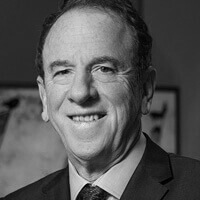
Host: John B. Quinn
Founder and chairman, Quinn Emanuel Urquhart & Sullivan
Share this episode:
Episode transcript:
Note: This transcript is generated from a recorded conversation and may contain errors or omissions. It has been edited for clarity but may not fully capture the original intent or context. For accurate interpretation, please refer to the original audio.
JOHN QUINN: This is John Quinn and this is Law, disrupted, and today we’re talking with two of my partners who are in our New York office, Chris Kercher, I think this is his third appearance on a Law, disrupted podcast, which is a record. Welcome back, Chris.
And Peter Fountain. I think this is his debut on Law. disrupted. And Chris and Peter are going to be talking about, I was gonna say some obscure subjects here, but, this case, Mallinckrodt case, raises some interesting concepts, which many people may not be familiar with in kind of a surprising context. It’s kind of the intersection of bankruptcy law, safe harbor.
It’s under bankruptcy law. The concept of fraudulent conveyance with which a lot of people don’t fully understand and pops up all the time and can be a very powerful weapon, the role of market makers in securities markets and the application of Irish law. We don’t get this combination very often on Law, disrupted gentlemen.
So let’s, let’s just leap into it. I don’t know which of you wants to go first, but maybe I’ll ask you, Peter, since you’re the virgin here, to kind of, to set the stage, what is this case about?
PETER FOUNTAIN: Yeah. Thanks. Thanks John. And thanks for having me here. So you know, this is a case that arises out of the Mallinckrodt bankruptcy and Mallinckrodt was a pharmaceutical company that went bankrupt in connection with the opioids and opioid litigation and the allegations by the opioid litigation trust were that Mallinckrodt had engaged in these share repurchases, share buybacks in the period 2015.
JOHN QUINN: Well wait a second. Lemme stop you there. What is this litigation trust and how is it that they have standing to do what? To assert these claims?
PETER FOUNTAIN: So the Litigation Trust was set up as part of the bankruptcy to bring claims for the estate.
And one of the things they asserted was that the share repurchases, the share buybacks the Mallinckrodt company had gone through in 2015 to 2018 were void.
JOHN QUINN: Well wait, so companies do share buybacks all the time. This is a very customary activity, corporations, it’s become a little bit controversial in the Trump administration. I think some industries should be doing buybacks, but this is, this happens every day. So what makes this, what allegedly made this problematical here that Mallinckrodt was doing? Share buybacks. These are open market purchases, I assume.
PETER FOUNTAIN: That’s correct. These were open market transactions, many of which took place on the New York Stock Exchange.
And what made this different, what set this apart is this idea that Mallinckrodt knew when it made these purchases, that it was bankrupt, that it didn’t, wasn’t able to satisfy its debt. And this is all part and parcel of what became an argument that the transactions were void and an attempt by the opioid litigation trustee to call back more than a billion and a half dollars worth of open market transactions
JOHN QUINN: And they’re void because, allegedly, because Mallinckrodt was insolvent at the time and therefore this was a fraudulent transfer.
Basically, that’s the idea.
PETER FOUNTAIN: That’s the idea, John.
JOHN QUINN: I say, Chris, tell us what’s a fraudulent transfer in this context.
CHRIS KERCHER: So it’s really interesting in this case, because this is not a situation where Mallinckrodt had incurred massive on-balance sheet liabilities. It didn’t borrow a bunch of money to do an LBO.
The allegation was that it should have known it was insolvent because it should have known that it had all this opioid liability, this tort liability. This was the thing that actually did I think drive it into bankruptcy, but it wasn’t something that was on the balance sheet that a financial counterparty could inspect.
So the allegation was that at the time, Mallinckrodt made these share repurchases under Irish law. It didn’t have the requisite capital because it had this tort liability in theory. So that was the claim, and that’s what we were opposing for our clients at Citadel Securities.
JOHN QUINN: And, and remind us what the elements of a fraudulent conveyance are.
I mean, are we looking at Irish law here for the elements of a fraudulent conveyance?
CHRIS KERCHER: So in this case, because the buybacks were more than two years prior to the bankruptcy, the trust was looking to state law to provide a longer period. And so that’s why Irish law comes into play because Mallinckrodt was incorporated under Irish law.
And so it was an Irish corporation.
JOHN QUINN: So, I mean, as I recall, just off the top of my head, a fraudelent conveyance is a transfer that’s made at a time that’s not for fair value at the time. You don’t have the ability to cover your obligations. Is that essentially it?
CHRIS KERCHER: That’s right. There was no allegation that it was an actual fraudulent conveyance with malice that there was, that Citadel or other market makers were somehow in on something.
It was more a construct what was, what’s commonly known as a constructive fraudulent conveyance, or by virtue of the insolvency and allegedly, lack of reasonably equivalent value. There was, they argued a constructing fraudulent transfer.
JOHN QUINN: And so the transfer, cash that was paid in order to get the shares at a time that you don’t have the ability to meet your obligations allegedly didn’t have the ability to meet its obligation, should have known it was insolvent.
The stock wasn’t worth the cash that was paid for it. And if it had been a fraud in conveyance, what would the consequences of that have been?
CHRIS KERCHER: So it was a $1.6 billion buyback, I believe. So they were trying to claw back 1,000,000,006 from ordinary market participants who just sold their shares in this pharmaceutical company they held years before.
JOHN QUINN: I mean, this seems like an extraordinary argument, extraordinary position, Peter. I mean, has there ever been successful fraudulent conveyance theory advanced in this situation to apply to open market purchases.
PETER FOUNTAIN: So there’s been nothing like the case that the Opioid litigation trust pursued against the market participants here.
And the, there was, this was a novel theory, this concept about Irish shares to be were focused on a single case that involved somewhat similar circumstances. It was one of the Enron cases that involved void transfers under state law, and they tried to extrapolate from that to this extraordinary result to try to claw back this massive amount of share purchases, as Chris was just talking about.
JOHN QUINN: Okay, so you got a litigation trust that’s been set up as part of the bankruptcy. Presumably there is a pot of money in that trust to hire lawyers in this setting, there are gonna be plaintiffs lawyers who are gonna assert claims and they’re gonna get paid outta that trust. And here there’s a very novel in theory advance without who are these lawyers?
Who are the lawyers that were advancing this and getting paid for trying to make new law here?
CHRIS KERCHER: Yeah, you’re right John. They were plaintiff’s lawyers in particular, at least I knew the firms from their work in some of the asbestos bankruptcies 20 years earlier where, you know, they went after all manner of asbestos manufacturers and everybody involved in the asbestos supply chain.
And, you know, those cases I think, have finally largely dried up having taken up the first 20 years of my career. So now it looks like they’re moving on to opioids, which, you know, I guess makes sense. But here, instead of targeting the usual suspects in an opioid manufacturing, I guess they saw, you know, these massive repurchases and thought they’d roll the dice on a very novel theory.
JOHN QUINN: Well, you’re a gentleman, Chris, you don’t wanna name names here. That’s fine. The audience members who wanna look it up, it’s a matter of, of public knowledge, I guess, who these very aggressive plaintiff’s lawyers are who are tapping into this litigation trust had been set up. And who can blame them?
I guess the money’s been set aside to pursue claims. What the hell? Who was Peter? Who was our client?
PETER FOUNTAIN: So our client in this case was Citadel Securities, which is a market maker, one of the largest market makers and there were a number of defendants in this action. You know, the 1.6 billion represents a large number of market participants, but we represented just one, Citadel Securities.
JOHN QUINN: Well, they’re not even, so Citadel, their market, they’re not even buying for their own account.
PETER FOUNTAIN: I think our success here dealt, you know, rose from our framing of the briefing of our motion to dismiss. And, the way that we teed this up for the court, which was that Citadel Securities and the other similar situated market participants, you know, were buying and selling this stock on the open market.
They were not transacting directly. They weren’t, they didn’t have direct dealings with Mallinckrodt. And you know, we’ll talk John about the safe harbor that applied here, but the purpose of it is to allow for these open market transactions, to have finality and to maintain the integrity of our financial markets.
JOHN QUINN: Yeah, I mean, you can’t really throw a spanner in the works if you could be unwinding these open market transactions and trying to claw back money and find out purchasers trace things after the fact. So I forget what you just referred to that as the need for finality and settlements.
That intuitively makes a lot of sense.
PETER FOUNTAIN: Absolutely. We dealt here with the section 546 E Safe Harbor.
JOHN QUINN: And tell us about, tell us about that. That’s the first time anybody on my podcast has mentioned the 546 E Safe Harbor.
PETER FOUNTAIN: You know, happy to be here for the first time. Happy to mention that for the first time, John.
So the 546 E Safe Harbor was really the crux of this dispute. And the 546 E Safe Harbor, as I mentioned, is intended to create finality, to preserve finality for the financial markets and what it does is for qualifying participants, which are, you know, they’re more specifics to it than this, but they are large financial institutions.
Among those, Citadel securities. It protects share repurchases and or it protects settlement payments, excuse me. And it protects securities contracts, secure transfers made in connection with securities contracts. And so the arguments that we made here on the motion dismiss related to Citadel Securities being a financial participant, we thought that was easily established and the fact that the share repurchases at issue, what Mallinckrodt had bought back from shareholders were settlement payments and transfers in connection with the securities contract.
Our argument was that these very plainly satisfy the elements of this safe harbor and what the opioid litigation trustee came back with, what their lawyers came back with a creative argument was they cannot because they are void as a matter of Irish law.
JOHN QUINN: Oh, okay. So they are void having been fraudulent transfers, so you don’t get to the issue of whether there was a securities contract in the settlement under the safe harbor. I guess that was a theory.
CHRIS KERCHER: That’s the number. And John, I would add that, you know, if you think about it just for a second, and I think we were very lucky to have a bankruptcy court and district court that really understood the implications of this.
But you would have market makers, have a burden or an obligation, to not just understand the financials of every issuer in which they’re transacting, which is already unreasonable, but they’d have to somehow go behind and understand their tort liabilities and their off balance sheet solvency to know whether you could even make a market for them.
It would totally hamstring the markets and undermine the whole point of the safe harbor.
PETER FOUNTAIN: Yeah.
State of incorporation, the country of incorporation of each publicly held company, the laws of that jurisdiction, and then somehow apply the laws to a not necessarily public financial situation before you went on and made any transactions in that stock. And that’s when it was so important for us to, you know, be back in the context of our briefing here.
JOHN QUINN: Well, I mean, look, congratulations guys. It really does sound to me like justice prevailed here, and this is a common sense result, but it’s interesting. Raises a lot of different kinds of issues, novel theory advanced by the lawyers for the litigation trust, but no cigar.
So, congratulations. It’s been interesting talking to you about this. This is John Quinn. This has been Law, disrupted. We’ve been speaking with Chris Kercher and Peter Fountain ,Partners at Quinn, Emanuel Urquhart and Sullivan.
Thank you for listening to Law, disrupted with me, John Quinn. If you enjoyed the show, please subscribe and leave a rating and review on your chosen podcast app. To stay up to date with the latest episodes, you can sign up for email alerts at our website, law-disrupted fm, or follow me on X at JB Q Law or at Quinn Emanuel.
Thank you for tuning in.
Published: Jan 30 2026


