






With: Bill Patry
of counsel in Quinn Emanuel’s New York office and author
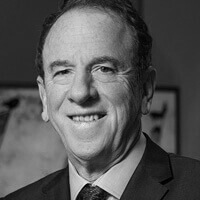
Host: John B. Quinn
Founder and chairman, Quinn Emanuel Urquhart & Sullivan
Share this episode:
Episode description:
John is joined by Bill Patry, of counsel in Quinn Emanuel’s New York office and author of numerous treatises and law review articles, including Patry on Copyright and Patry on Fair Use. Bill also served as in-house counsel at Google for 17 years. During that time, Google never lost a copyright case. They discuss a pending Ninth Circuit copyright appeal that could reshape how courts determine substantial similarity, the central test for copyright infringement.
The dispute arises from a tattoo created by celebrity artist Kat Von D using a copyrighted photograph of Miles Davis taken by photographer Jeff Sedlik. She documented the process of creating the tattoo on social media and acknowledged copying the photograph exactly, creating the expectation that liability would be straightforward. Instead, the trial court denied the plaintiff’s motion for summary judgment, the case proceeded to a jury, and the jury found no infringement, prompting an appeal focused less on the facts than on the Ninth Circuit’s governing legal standard for infringement.
For decades, the Ninth Circuit has applied two separate tests for infringement: the extrinsic test and the intrinsic test. The extrinsic test attempts to identify objectively protectable elements, while the intrinsic test asks jurors to compare the overall concept and feel of the two works, even though neither “concept” nor “feel” is copyrightable.
The panel that heard the appeal affirmed the judgment in an unpublished opinion, concluding that the copying was fair use. However, the panel also issued three separate published opinions sharply criticizing the long-standing intrinsic test as confusing, overly subjective, and inconsistent with meaningful appellate review. The opinions suggested that the existing framework undermines copyright protection by making erroneous jury verdicts difficult to correct. They explain that copyright plaintiffs may lose cases even where copying is undeniable because the intrinsic test effectively shields jury decisions from appellate review.
The en banc rehearing, scheduled for September 29 or 30, 2026, will present an opportunity for the Ninth Circuit to reconsider decades of precedent and replace an unpredictable doctrine with a clearer, more reviewable framework that could significantly influence future copyright litigation.
The proposed alternative standard would require judges to determine, as a matter of law, which elements of a work are protectable before the case reaches a jury. Jurors would then decide only whether the defendant materially copied that protected expression.
Published: Jul 17 2026