





With: Jeffrey N. Boozell and Christopher Tayback
partners in Quinn Emanuel’s Los Angeles office
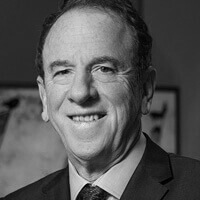
Host: John B. Quinn
Founder and chairman, Quinn Emanuel Urquhart & Sullivan
Share this episode:
Episode transcript:
Note: This transcript is generated from a recorded conversation and may contain errors or omissions. It has been edited for clarity but may not fully capture the original intent or context. For accurate interpretation, please refer to the original audio.
JOHN QUINN: This is Law, disrupted, and this is John Quinn, and today I’m talking to two of my partners who are in our Los Angeles office, where I am, Jeff Boozell and Chris Tayback. And we’re gonna be talking about wildfire litigation, something that we have a lot of here in California, and we’re involved in … I mean, I’m sure our listeners know there were some major wildfires.
When were those, guys?
JEFFREY BOOZELL: January 2025.
JOHN QUINN: 2025, I’m sure you all know there were two major fires here in Los Angeles. I think 6,200 homes were destroyed in both fires. We’re involved in those, but there’s a whole history that goes back some time of wildfire litigation in California, and now it’s become a thing in other states as well, like in Colorado and Oregon, Washington, and the like.
So we’re gonna talk about what is wildfire litigation, what kinds of claims, what kinds of legal doctrines have been developed. So let me begin with you, Jeff. What is… I mean, how long has wildfire litigation been a practice area?
JEFFREY BOOZELL: So wildfire litigation’s been going on in some form since probably the ’90s. But we at Quinn Emanuel were really involved in the first major wildfire litigation that ever occurred, and that was down in 2007 in San Diego. It involved the Witch, Rice, and Ajito fires, which burned over 220,000 acres, and SDGE was accused of starting those fires.
Claims for negligence, inverse condemnation, and other things were brought against them. And that was really the first time that there was really a mass tort
JOHN QUINN: And so how many destroyed homes are we talking about in that one?
JEFFREY BOOZELL: So in that case, there were, thousands of destroyed homes. In the Palisades by contrast, there were 6,800 structures, and in Eaton there were 9,400 structures. So this is by far bigger.
JOHN QUINN: The numbers were bigger than what I said. So everybody’s wondering, Chris, and I’m sure you have the answer to this, why all these wildfires in California?
CHRISTOPHER TAYBACK: Well, I mean, you know, obviously people debate the cause, but climate change is a real thing. I mean…
JOHN QUINN: Is there any actual evidence that this uptick… Well, first off, is it an uptick? I mean, if we go back in history, early part of the 20th century, were there wildfires?
CHRISTOPHER TAYBACK: I’m sure there were wildfires. Whether there were wildfires in urban areas is a very different thing.
JOHN QUINN: Okay. Is there actually some evidence tying this phenomenon to climate change?
CHRISTOPHER TAYBACK: I think there is, but I think for our purposes, it almost doesn’t matter. What matters is that wildfires have become, you know, prominent in areas that are densely populated, and that’s a problem. They’re the new mass disasters. The prior litigations, if you go back 100, 150 years, often involve floods, flood controls…
JOHN QUINN: We don’t have any water now. We don’t have water now, so we’re not having floods in Southern California.
CHRISTOPHER TAYBACK: Yeah. The judge in the Palisades case did compare, you know, trying to draw some analogies to some existing case law, that wildfires are sort of the new floods. I mean, it’s the new mass disaster, that is partially humanly created as opposed to, say, a tornado or a hurricane.
JOHN QUINN: So are the defendants in these cases always utilities? It seems like there’s always a utility involved.
JEFFREY BOOZELL: So typically, the utilities are involved typically in California at least, it’s SDGE, Edison, PGE. In other states it’s, you know, PacifiCorp in Oregon is having a big suit. And then that’s typically because in the types of conditions we see now, it’s the utilities’ power lines that are starting these fires.
And that’s what happened in Eaton, and we can talk more about that if you want. But in the Palisades it’s actually quite a different case. In the Palisades, the main defendants are the LADWP and the State of California.
JOHN QUINN: What’s an LADWP? Nobody’s gonna know what that is.
JEFFREY BOOZELL: The Los Angeles Department of Water and Power, is one of the defendants in the Palisades fire, and it’s not because they started the fire with their power lines.
In this case, the allegations against the Los Angeles Department of Water and Power relate to the draining of a reservoir that left communities around the fire start without adequate water to fight the fire. The allegations against the state relate to the fact that on January 1st, the Lockman fire started.
They addressed that fire. The firefighters put that out and, and labeled it contained. And then over the course of the next week it was left to smolder, and the state had notice of that smoldering, and so there’s a dangerous condition claim against the state. So Palisades is very different in that sense, John.
JOHN QUINN: Okay. So, these cases are typically brought against utilities, governments, public bodies who the plaintiffs allege had some responsibility for the disaster.
CHRISTOPHER TAYBACK: Yes, although I will say that there can be some part of some claims that also can be to, you know, other private entities that contribute to it in some way. For example, if you don’t properly clear or deforest your land and leave it in a perilous state and it ignites and then causes the fire to spread in a particular direction or burn down structures that otherwise would not have burned down, that can also be a part of a claim.
And that, there are some of those claims embedded in both of these.
JOHN QUINN: All right, so there have been these claims, you know, these disaster fire claims against utilities for a couple of decades now in California, and I think wasn’t, didn’t PGE, Pacific Gas and Electric, go through a bankruptcy, because of the responsibility that they were found to have? Why can’t utilities get their act together?
I mean, what, it seems like there’s a history here that they all should’ve learned. Is it just impossible to fireproof power lines and what, you know, utility machinery and, I mean, why isn’t this solved?
JEFFREY BOOZELL: Well, it depends on who you ask, I guess, right, John? The utilities will say the answer to your question is yes. It’s very difficult.
JOHN QUINN: They’re gonna say, “Well, the plaintiff’s lawyer here, Chris Tayback said it’s climate change. It’s not our fault.” I mean…
CHRISTOPHER TAYBACK: Climate change, but that’s something that’s predictable.
JOHN QUINN: Okay.
JEFFREY BOOZELL: Had notice of that for sure, and that’s part of the problem.
JOHN QUINN: I’m joking sort of, but let’s get back to the issue. What are the utilities still doing wrong?
JEFFREY BOOZELL: So it’s interesting, John, ’cause after the SDGE fires, they undertook a very comprehensive program to do something called hardening of their system, where they change out conductors and poles and lines, and do a lot of things that are supposed to prevent fires, and they haven’t had a major fire since.
But Edison and PGE, they give lip service to trying to put together those types of programs, trying to harden their systems, trying to do more, but they continue to fail. And that’s some of the allegations that the plaintiffs are making in these cases, that they are just negligent in understanding and addressing…
Not understanding. They understand the risk. It’s well-known. But they’re failing in doing what needs to be done, what a reasonable utility would do in order to address those risks.
JOHN QUINN: I mean, tell us exactly what happens here, at utility installations or lines that cause a fire. Does a line drop and it’s a hot, it’s a hot line that drops in dry grass, or somehow there’s sparks coming out of the machinery that’s on the mountain? I mean, exactly what happens? What are the mechanics?
JEFFREY BOOZELL: So it can be any number of things, right? So I’ll just give you some examples from the cases that we’ve handled. In SDGE there were three fires and three different ignitions. One was a transmission line where the winds got so bad that the lines actually slapped together, causing sparks that went to the ground and started a fire.
In the Ojito fire, some lashing wire, which is the wire that binds up fiber optic cables underneath the power lines, came loose, and that blew up into a power line and started a fire. And in Rice, a tree fell and took down a power line, and that started a fire. We’ve also handled cases where trees bent over and hit lines.
And in Eaton, the current evidence is showing that there was an old unused line that was energized sort of secondarily and wasn’t properly grounded, and that sparked and caused a fire. So there are lots of mechanics that can happen, so there are lots of things that the utilities need to do in order to prevent these fires.
They’re the experts. They know what needs to be done. They just don’t do it.
JOHN QUINN: Just as an aside, I met a guy named Adrian Aoun, who’s got a startup company which uses drones to detect fires and fight fires. So you put heat sen- You have an area where there’s a potential for… you’re nodding your head. Maybe you know about this company.
JEFFREY BOOZELL: No, I don’t.
JOHN QUINN: All right, so you put… Y- you take an area where there’s, you know there’s potential for fires, and every square mile or something you put some heat sensor, and when the heat sensor sends a signal, drones are automatically launched, and the drones can deliver fire…
They’ll go to the spot, and they’ll deliver fire retardant. Have you ever heard of anything like that?
JEFFREY BOOZELL: No, I mean, I’ve heard of, of companies like SDGE putting up weather monitors and cameras and other things to detect it, and they had their own fire department and helicopter and those kinds of things, but I’ve never heard drone usage. That’s amazing.
JOHN QUINN: I’ll give you his, he’ll probably accept your investment. It’s a very early stage company. So, has there, as a result of this litigation that’s been going on in California for decades now, has it, have there been some, you know, wildfire litigation-specific legal doctrines developed? Chris, maybe you can tell us about that?
CHRISTOPHER TAYBACK: Yeah. I mean, I’ll start with the, what it’s not. You know, most people operate under the misconception that, well, a wildfire destroys 5,000, 10,000 homes, whatever the number might be, there’s a class action. It’s… These aren’t class actions, they’re mass torts.
JOHN QUINN: Class actions?
CHRISTOPHER TAYBACK: The reason is because the harm suffered as well as sometimes the causation of the particular fire at the particular home are disparate causes.
There are different contributing factors. So, the group of individually harmed individuals…
JOHN QUINN: There are too many facts that are unique to class members, so it’s not appropriate for class treatment.
CHRISTOPHER TAYBACK: And that has been litigated in California and pretty well-established by this point in time through the prior wildfire litigations. So these are mass torts. They’re all individual claims, individual cases that are coordinated under the California rules that, to try to…
JOHN QUINN: They end up coordinated, so they end up before one judge.
CHRISTOPHER TAYBACK: Correct. And in these fires, there’s two different judges, one for the Eaton fire and one for the Palisades fire. And they’re coordinating the cases that arise from those individual fires. And they try to, you know, create sort of bespoke processes that comply with the law, but nonetheless try to manage what are gonna be a large number of similar but not identical claims.
So, but the second, I think, really big legal issue that has arisen, that is applicable in most cases that, or wildfire cases in California, is a concept of inverse condemnation.
JOHN QUINN: I’ve heard that phrase so much, and I’m kind of unclear what inverse condemnation is.
CHRISTOPHER TAYBACK: Well, I’ll start and, and then maybe Jeff can jump in too. But the concept of inverse condemnation is just like in… under the Constitution, the California Constitution, as well as the US Constitution, there’s a provision that provides, for the taking, what happens in the circumstance of a taking, and it’s often in the context of condemnation.
JOHN QUINN: Exercise of eminent domain.
CHRISTOPHER TAYBACK: That’s the classic example. The government says, “We want to build a freeway. It’s gonna come through your neighborhood, and we will pay you for your home because it’s gonna be torn down for a project in the public good.” The concept of inverse condemnation is it happens sort of the other way.
That is to say, there’s a public good that is erected, in this case it’s maybe a utility, and it’s providing electricity to the larger population. But the risk of a wildfire sparked by a utility line is disproportionately borne, in the case of a wildfire, by those who were harmed by the wildfire. And therefore, it’s because of the fact that it was part of a public work for the public good, and it…what happened was it was designed in such a way that it… there was a necessary risk, a necessary loss, something that was inevitably gonna happen or at least predictably gonna happen. The fact is they are then co- entitled to compensation. It’s like a taking.
JOHN QUINN: I see. But it’s not from the government…
CHRISTOPHER TAYBACK: It’s not from the government in that setting. Correct.
JEFFREY BOOZELL: Well, and that’s been the source, John, of a lot of litigation that’s happened before, some of which we were involved in, because they are privately owned public utilities, but because they have…
CHRISTOPHER TAYBACK: A government-esque, you know, powers, like eminent domain to build their lines, since they have a monopoly, since they’re regulated, the law under a number of cases that, that have come down over the years does treat them as a public entity for that purpose.
JEFFREY BOOZELL: So it treats electric utilities in California as strictly liable for damages caused by their lines.
JOHN QUINN: I mean, the, so, but the ratepayers end up paying for all this, right? I mean, so if the utility has to pay tens of millions of dollars, presumably they just adjust their rates?
JEFFREY BOOZELL: Well, that’s also complicated because the rates that they charge are approved by the CPUC, and the process has changed over time.
CHRISTOPHER TAYBACK: The California Public Utilities
JEFFREY BOOZELL: Yes, the California Public Utilities Commission, sorry. And because of that, there is a procedure whereby they have to get approval from the California Public Utilities Commission in order to pass through the rates.
And if they’re found to have not been a prudent operator, then they actually have to absorb it as the shareholders have to pay for it. So and, and it depends on the case. Some get passed through, some don’t get passed through. But at the end of the day, likely there will be increases of rates for various reasons after wildfires, including the utilities will say to help harden the system and make it, less fire prone.
JOHN QUINN: We’re seeing these cases outside of California now, right? Some of the other states. Tell us…
JEFFREY BOOZELL: There are quite a few cases going on outside the states that have been for a while. The biggest one right now is going on in Oregon. It’s a case against Pacific Corp for a fire, I believe it was in 2020, and the interesting thing is in Oregon, they don’t have inverse condemnation like we do here, so it’s a negligence-based claim.
JOHN QUINN: But so if the, if inverse condemnation applies, you don’t have to prove negligence?
JEFFREY BOOZELL: For property damages, that’s right. So as a takings clause, it’s strict liability, and it covers the property damage. You still have to prove negligence for your emotional distress and other things that travel with that, but in other states like Oregon, they don’t have that, so the case is a little bit more of an uphill.
And as I understand it, it’s also, in that state they have different rules surrounding class actions, so I think the case there is actually a class action. But you see these variations of the same theme coming up in Texas, Montana, you know, every place on sort of west of the Mississippi that has fire risk at the wildland-urban interface.
JOHN QUINN: I know from our firm’s history with these cases that you’re dealing with thousands of claimants, thousands of people who have lost their homes or their homes have been damaged. I have the impression that the big challenge in these cases, correct me if I’m wrong, is really how do you settle them?
I mean, these cases don’t go to trial. Are they rare, do they ever go to trial?
JEFFREY BOOZELL: As far as I’m aware, there’s never been a trial in a major wildfire case in California. They are going to trial in Oregon, but not in California.
JOHN QUINN: That’s an astonishing fact. I mean, you would think that one way to reach settlements is, you know, do have bellwethers. Try some of the cases, place values on them, see what juries think…
JEFFREY BOOZELL: And that is the way it’s set up. For example, in Eaton, we have bellwether trials that are set in January of 2027. Historically, what’s happened is bellwethers have been set. That drives the schedule. Defendants set up mediation programs, and the cases that are going to trial get settled out. Chris and I handled one for PGE.
I’ll let Chris talk about it. We settled it on the courtroom steps.
CHRISTOPHER TAYBACK: But there’s a legal reason for that, John. There’s, because you could do bellwethers, that sort of would estimate damages. By the way, there’s different damages available for different causes of action. Inverse condemnation provides for property damage, but, you know, if you have a tort, you can get, you know, emotional distress and other kinds of damages.
But, but in these cases, to try liability because they’re not a class action, to try liability in any series of 1,000 or more cases, you know, the concept of collateral estoppel, meaning the defendant is present in every case, and if they win one or win two or win three, then they can move on. But if they lose one, they’re collaterally stopped on those common issues for all of the rest of the cases.
So the downside to litigating, for example, a truly common issue is really significant for a defendant where, as in California, you don’t have a class action.
JEFFREY BOOZELL: And, the other really significant downside is what we talked about earlier, is this concept of getting the right to pass through the cost to the ratepayer or to recover from the wildfire fund that’s been set up. You have to show as a utility that you are a prudent operator, and if you go through a trial and you get hit with a negligence verdict, that becomes very difficult.
JOHN QUINN: Well, that’s a high-risk proposition for the utility to take that, that to trial. So you said a lot of these cases get settled. They set up mediation programs. Tell us what those look like.
JEFFREY BOOZELL: So those can take a number of different forms. Historically in the California cases that we’ve been involved in and others, there’s been a mediation program set up where cases are basically settled one at a time, sometimes in small groups. But you go through a typical mediation program where there’s a demand and a response, and then you go and you sit with a mediator and they get settled one at a time.
And that’s the sort of beauty of it, is that you get the sense that each individual plaintiff is really able to put on their own case. They’re really able to tell their story, unlike in a class action. There is another mechanism that was modeled, in the PGE bankruptcy and then was used in the Maui fires, and that’s the concept of sort of an aggregate settlement.
And I’ll use Maui as an example. In the Maui fires, the defendants paid a total of $4 billion into a fund, and then there was a claims administrator set up, and all the plaintiffs submit their claims to the claims administrator that then evaluates it and has an appeals process, and then distributes pro rata each plaintiff’s share of the 4 billion.
JOHN QUINN: Yeah. I mean, that’s common, right, in mass torts? Like World Trade Center, there was a fund set up, and then I think you had Ken Feinberg, who does a lot of these kinds of cases, seems to be trusted by both sides, and comes in and allocate- hears claims and allocates, allocates the money. I mean, in these cases, wildfire cases in California, are these mediations with one mediator, or are you dealing with a lot of different mediators?
JEFFREY BOOZELL: Typically, one mediator’s not enough. I mean, you can imagine in cases where there’s thousands of claims that one guy couldn’t, or woman couldn’t do it, it at all herself. So typically, it’s been JAMS or some other group that’s across, different mediation arbitration houses. You try to get as many as possible because you’re, you’re right, John, the real driver of settlement timelines is the availability of resources to do it, both defendant’s counsel, plaintiff’s counsel, mediators.
And so the more you can get, in any of those buckets, the faster the plaintiffs can be compensated for their losses.
JOHN QUINN: I mean, we hear about, there are emergency relief programs that the federal government has, makes money available for people, you know, who have lost their homes. The state does as well. I mean, why do you need litigation when you have all these publicly funded relief programs?
CHRISTOPHER TAYBACK: They’re never enough.
JEFFREY BOOZELL: It’s never enough. Right. No, that’s absolutely right. Chris, do you wanna talk about it?
CHRISTOPHER TAYBACK: One of the things… Look, there are other competing crises that have led to the fact that, you know, litigation is really the best solution. One is those programs aren’t funded enough to compensate people for the full scope of their losses. A second dynamic here, and, and you sort of maybe embedded in your question is, you know, the insurance industry is lagging behind in making sure that people are adequately insured.
Property values, as we all know in the United States, have gone up considerably over the decades, and people are under-insured almost uniformly.
JOHN QUINN: Yeah, well, I mean, who would wanna sell fire insurance in an urban area in Southern California now? I mean, I don’t know. You guys would know. I assume the premiums have gone through the roof?
CHRISTOPHER TAYBACK: And many insurers have withdrawn from the state.
JOHN QUINN: Hmm. Is there some kind of forced insurance program where carriers are required to offer insurance at some level? Or is…
JEFFREY BOOZELL: The last, the insurer of last resort in California is the California Fair Plan, and it was set up as a backstop so people who don’t have available insurance from any other source can, can get it from the California Fair Plan. It’s backstopped, as I understand it, by members of the insurance industry, but it’s very expensive, and as we saw in the Palisades fire, it’s quickly overwhelmed.
CHRISTOPHER TAYBACK: And the limits are comparatively low to the property values.
JOHN QUINN: All right, well, let’s talk about these historic fires, the Eaton Fire, in Altadena, Pasadena area last year, and the… It was at the same time, you had the fire burning in Malibu and, and Pacific Palisades, what, maybe 15 miles apart. I mean, there was no connection in the origin of those two fires, I assume.
JEFFREY BOOZELL: There was not.
JOHN QUINN: It’s not like sparks blew across LA. I have to declare an interest here. I have a home, in Pasadena, near Caltech JPL. Not all that… I guess the fire was moving very fast. I wasn’t home. I was of no use whatsoever, but my wife got a knock on the door by a fireman at 5:00 AM telling her to get out of our house, ordering her out.
And so she went out for 24 hours and then snuck back in. I don’t think she was supposed to do that. But so, that’s my personal involvement. Fortunately, the fire didn’t get close to us. I think it was moving so fast that they were being careful in evacuating people in my area of Pasadena. But let’s talk about these two fires.
Maybe talk about that one first, the Eaton Fire. What’s our involvement in that? What is known about the origin of that fire, and what the resolution may ultimately be?
JEFFREY BOOZELL: So our involvement is that we’re representing plaintiffs in both of the fires. In the Eaton fire we have around 100 clients at this point and climbing, that are suing Edison on behalf of themselves and their family members for damages caused by the Eaton fire.
JOHN QUINN: I assume, by the way, these are contingent fee cases. These clients are not engaging us on an hourly basis
JEFFREY BOOZELL: That’s true.
That’s true, and, you know, we’ve all seen the videos on the internet or on the TV of the fire starting at the base of an Edison power pole. The transmission lines up in Eaton Canyon were not properly…
JOHN QUINN: How is it that that video exists?
JEFFREY BOOZELL: It was actually a video from as I recall, it’s a video from a security camera on an ARCO station in Altadena that just happened to be pointed sort of…
It was pointed at the ground here, but in the distance you can see the origin. And there were, of course, there are people that live right around there, who once the fire breaks out, they take out their cell phones and they start recording. So there are quite a few videos.
JOHN QUINN: All right, so what, what do, what do these videos show in terms of what actually happened and started the fire?
JEFFREY BOOZELL: So the video shows, the Arco one is far away, but the videos show a flash at the base of, or on a tower in Eaton Canyon, and then a fire starting underneath it. So there’s a lot of expert work going on, which I won’t go into, about how to, how that turns into a fire and how the lines cause it.
But the, the working theory that everyone been, has been talking about publicly is that it, there were lines that were not properly grounded, and that caused sparks in the wind that ended up starting a fire that catches in the brush, gets caught up by the wind, and just moves literally like wildfire, into Eaton, and North Altadena.
JOHN QUINN: And, what is the structure of that litigation now? Is it the cases are coordinated before one judge? Is there one master complaint now?
JEFFREY BOOZELL: There is. Yes, it’s the typical sort of mass tort wildfire litigation in California. It’s coordinated before Judge Laura Siegel, in LA Superior Court. There’s a master complaint with adoptions filed by everybody. There’s a liaison committee and there’s a working group committee, a steering group committee.
There’s lawyers who are working all together. All the plaintiffs are coordinated in putting together the liability case and working on their own damages theories. And that case is moving along very nicely. As I said earlier, there’s a trial set for January 2027. 200 cases have been identified as potential bellwether cases for that trial, and we’re in the middle of doing both liability discovery, continuing with that, and damages discovery on the first 75 of the bellwether households.
JOHN QUINN: I understand the utility in that case, Southern California Edison has established some type of compensation program. Can you tell us about that, Chris?
CHRISTOPHER TAYBACK: Yeah. So they’ve set up with, I mean, I think in an effort to try to preempt litigation, or, you know, attorneys that are pursuing litigation, even if the case might settle, they have a thing called a voluntary mediation program, which they have started and they’ve tried to publicize to induce people to go and, you know, with the argument that they will bypass the slower process of litigation.
I think we have done some analysis, and Jeff can maybe address that in terms of how the compensation compares to what one would get if they actually pursued a more conventional path.
JEFFREY BOOZELL: Yeah, so it’s a little generous to call their program a mediation program, ’cause there really isn’t a mediation going on. They are offering to pay on their schedule people who apply. They’ll give you a number, and you either take it or lose, or leave it and go to mediation.
JOHN QUINN: If you take it, you’re done. If you don’t, you can still litigate presumably. And are many people taking that or no?
JEFFREY BOOZELL: We have a few clients that are taking it. In some situations it does make sense for individuals. In most cases it will not. They’re touting numbers. I think you’re looking at maybe 10 or 20% that are considering it. So it’s getting some traction, but it’s not the right move for most people.
JOHN QUINN: Right. All right, so in the Eaton case, we think the cause is pretty clear, the responsible party is pretty clear. How about the Pacific Palisades fire case? How is that different?
JEFFREY BOOZELL: So that case is different because the causation is different. There’s no utility lines in the area where the fire started. So the sequence of events that led to the starting of the Palisades fire, as we’re developing the evidence appear to be the following. That on January 1st, a fire was started, it was called the Lockman fire, by an arsonist who’s actually, his trial is this week, starting this week. I think they did openings maybe…
JOHN QUINN: How was he discovered, this arsonist?
JEFFREY BOOZELL: There was a whole federal investigation and I, and my recollection is that he bragged about it potentially. He was like an Uber driver, as I recall. We’ll have to check on that. But he started the fire.
JOHN QUINN: This has nothing to do with Uber, by the way. We’re not suing Uber. Right.
JEFFREY BOOZELL: I’m trying to remember all the details of his case.
But, the big fact is that after he set that fire, the LACFD, Los Angeles County Fire Department showed up and put out the fire.
CHRISTOPHER TAYBACK: Attempted to put it out.
JEFFREY BOOZELL: Well, they say they put it out. They contained it, right? And then after they mopped up-
JOHN QUINN: By the way, I’ve always been confused when you get news reports where they, the fire is 70% contained. It’s now 40% what are they saying? What does that mean?
JEFFREY BOOZELL: They’re saying that they have a control over that portion of the perimeter of the fire. They, it’s not gonna … They believe it’s not gonna spread anymore. So if it’s 70% contained, they have 70% of the, of the front of the fire.
JOHN QUINN: Oh, okay. All right. That was, I was just curious about that, but I interrupted you. Sorry. You were telling me about the Palisades fire.
JEFFREY BOOZELL: That’s okay. And so we have text messages and video of the days following the Lockman fire where state employees
JOHN QUINN: The Lockman Fire, that’s the Palisades Fire.
JEFFREY BOOZELL: No, the Lockman fire is the January 1st fire that was started by the arsonists. And after that one was contained and the Los Angeles Fire Department left, state employees are seen walking around looking at the area, that was burned.
And you can see smoke and smoldering in the foreground, and that’s on state land. And so the allegation against the state, we think is very strong, is that they had notice of a dangerous condition which existed on their land, the smoldering embers of a fire, which the ATF later says is what led to a rekindle and then the Palisades fire. The state had notice of these, this dangerous condition and failed to address it, and that leads to liability.
JOHN QUINN: All right, so what you’re telling me is there was a, they put out, quote unquote, air quotes, put out the fire, but it was still smoldering, and then it flared up. Is that what happened?
And that’s when the damage was done, after that?
CHRISTOPHER TAYBACK: That’s correct. That was, that then became the Palisades fire. And, you know, I mean, a smoldering ground like that is sort of the classic Smokey the Bear commercial, you know, from when we were kids. It’s like you can’t really leave a fire smoldering,
JOHN QUINN: Okay.
CHRISTOPHER TAYBACK: Especially in the conditions, the weather conditions that we all knew were going to be happening, which is the Santa Ana winds and dry, windy conditions, that aren’t uncommon that time of year.
JOHN QUINN: All right, so who are the defendants in that case?
JEFFREY BOOZELL: So the state’s a defendant. LADWP, the Los Angeles Department of Water and Power is a defendant, and they’re a defendant. We have an inverse claim against them, based on the fact that there was a large, reservoir in the area, the Santa Ynez Reservoir, that was supposed to be full that had originally been built to help with firefighting and fire prevention, and they emptied it in order to, to repair a tear in a cover that was on there, and they left it empty for a very long time.
And because that reservoir was empty, helicopters couldn’t pick up water and drop it, and eventually the fire hydrants in the area ran dry. So that’s the claim.
JOHN QUINN: Yeah, I read that firetrucks came, they hooked up hoses to fire hydrants, turned on the hydrant, and there was no water.
JEFFREY BOOZELL: That’s correct. And so then, then there are a number of other defendants. There are defendants like the Getty, for instance, they… We have claims against them for failing to keep the brush on their property properly maintained, which would have stopped the fire from burning some of our clients’ homes that are on the other side of the Getty from where the fire came.
There’s power pole claims against LADWP, Los Angeles Department of Water Power, and Southern California Edison. There are claims against, infrastructure providers like Verizon and PacBell and others. There’s a lot of defendants in that case.
JOHN QUINN: So, and what’s the stats… First off, how many clients do we have in the Palisades fire?
JEFFREY BOOZELL: We have about 2,000 clients in that case. All told, we have about 2,500 clients across the two cases.
CHRISTOPHER TAYBACK: And are those clients or households, Jeff, by the numbers you’re…
JEFFREY BOOZELL: Those are clients. Those are people.
CHRISTOPHER TAYBACK: So they’re individuals, a number of households. Households tend to have multiple people, so we have everybody in a household has an individual claim.
JEFFREY BOOZELL: Right, right. And in numbers of households, we have about 1,000.
JOHN QUINN: And what are the, what’s the status now of the Palisades fire?
JEFFREY BOOZELL: So the Palisades fire is moving much more slowly. We just got through a first round of demurs. The State of California and the Los Angeles Department of Water and Power filed demurs to the master complaint, which we were able to defeat. They filed petitions for writs, mandate before the California Court of Appeals.
We filed preliminary oppositions and got those denied, and now those are up on petitions for review, which we’ve also opposed to the Supreme Court, correct. And in the process of that discovery has started on, on their claims, so that’s, that’s a positive move forward. And demurs for the other defendants are due over the summer.
So it’s moving. We’re finally getting some progress, but there’s no trials that have been set and no, you know, long-term timeline.
JOHN QUINN: Are the defendants in these cases represented by… I mean, I’m not gonna say firms of the quality of Quinn Emanuel because there aren’t any firms of the quality of Quinn Emanuel, but are they, like, major well-known law firms, lawyers that know what they’re doing?
JEFFREY BOOZELL: Some yes, some no.
JOHN QUINN: Okay. Well, I take it from listening to you guys this really is a specialty, understanding this, the law and, and how these cases get resolved.
What are we talking about in terms of expected damages in these two, relating to these two sets of fires? Do you have some estimates about what that looks like?
JEFFREY BOOZELL: The estimates that I’ve seen in the public domain are that the damages caused by these two fires could reach over $200 billion.
JOHN QUINN: 200 billion with a B.
JEFFREY BOOZELL: That’s correct, and so how that’s gonna get resolved and by who is a question.
JOHN QUINN: I mean, there is a fund in California isn’t there, established by law?
JEFFREY BOOZELL: There is a fund that was set up after the PGE bankruptcy, in order to prevent publicly owned or privately owned public utilities from going bankrupt again. It’s authorized to have, I think it’s $39 billion in it right now, but it’s only a backstop for the privately owned public utilities like SDGE, PGE, and Edison.
Unfortunately, it doesn’t cover the state of California, it doesn’t cover Los Angeles Department of Water Power. So in the Edison case, we know that there’s a good backstop to pay claims. And in the other case, we’re, we have to go after the state and the city and everybody else for their part of the damages.
JOHN QUINN: How does this, the litigation and the claims for damages interact with the insurance coverage?
CHRISTOPHER TAYBACK: So insurers, so by that, so there’s different aspects of the insurance coverage. So for example, the Los Angeles Department of Water and Power have some insurance, but it’s not anywhere near enough to cover the potential liability. Now, where homeowners suffered a loss and they have insurance, their insurers also then have a claim that they have to pay, you know, they’ll presumably pay out under their policy to the homeowner.
The homeowner’s, you know, economic loss is reduced by that much. However, that insurer then has a claim also against the wrongdoers, the alleged wrongdoers in the cases for subrogation, meaning they’re entitled to say, “Hey, we paid under our insurance policy, but you are the cause of the loss, and so you need to pay us back.”
JEFFREY BOOZELL: And so the upshot of that is, John, in our litigation, we as plaintiffs’ lawyers now and all other plaintiffs’ lawyers sue the defendants for the uninsured portion of the losses. The subrogated insurers have their right to go after the defendants for the insured part. Every dollar they pay, they get a right to go after that, that defendant for that dollar. And we are there for the plaintiffs to recover that uninsured portion.
CHRISTOPHER TAYBACK: But, I think there’s a couple points to make, and this really relates to something we talked about earlier. Two points. One, the uninsured portions are considerable because the nature of property values and the underinsurance epidemic, I’ll call it, means that there was, for almost everybody, they were underinsured.
So insurance did not make them whole. Another part of it is where you can assert a tort claim, you’re entitled to damages that aren’t generally insured. Your, you know, your emotional distress, you witnessed a fire, it destroyed your family pets. You know, all of your belongings, your, you know, the stress of the child or parent that had left things at the home that now you’ll never have a- access to again.
All of the things you can imagine that are traumatic about losing all your property in a fire, is, you know, is something that’s also compensable under the law if you can assert a tort claim.
JOHN QUINN: Right. Are there potential punitive damages?
CHRISTOPHER TAYBACK: Depending on the torque claim.
JEFFREY BOOZELL: Damages have been asserted, yes.
JOHN QUINN: Okay. So what, what would you say are, our firm’s particular strengths based on our experience in dealing with these cases?
CHRISTOPHER TAYBACK: I’ll start ’cause I’m gonna tout Jeff, which is, I mean, Jeff has been doing it… I’ve been involved to a lesser degree. Jeff has been doing this for pretty much 15 or 20 years, and has been on almost every side of these issues, in terms of the representations. Representing landowners who are both plaintiffs and defendants, representing utilities at various points in time, now representing plaintiffs as well.
JOHN QUINN: Jeff represented utilities? Is that true, Jeff?
JEFFREY BOOZELL: It’s true, yes.
CHRISTOPHER TAYBACK: He’ll defend himself later. But I think we have a really great and probably unrivaled understanding of the way these cases are analyzed on all sides. And if you know, as you well know, John, as, you know, you’ve been the master litigator for so many years, you know the, the key to winning is really to understand what the other side’s gonna do.
And I think that’s something we have that’s incredibly valuable. As well as just, I think, a lot of intellectual firepower to analyze what are, can be complicated issues.
JEFFREY BOOZELL: And John, as you know, the real driver we think of, you know, resolutions for our clients are our trial skills.
JOHN QUINN: Even though these cases don’t get tried…
JEFFREY BOOZELL: There’s always the threat of trial, and the reason they settle is because they could go to trial. So when you have that credible trial threat, we believe, that’s a benefit to our clients.
JOHN QUINN: How large is our lawyer team that’s working on these cases altogether? Do you have an estimate, how many people, how many lawyers?
JEFFREY BOOZELL: I think we’re probably around 20, 25 now working on this.
JOHN QUINN: And what are the roles of the associates on these cases? What kinds of things do they do?
JEFFREY BOOZELL: It’s a good question. We try to use these cases as an opportunity to get our very good and very smart associates as much experience as possible. So we call them the relationship team. There are associates that are assigned to each one of our individual clients, and they’re really asked to take ownership, to be the lawyer that’s in charge of working with those.
JOHN QUINN: There must be a lot of communications coming from homeowners.
JEFFREY BOOZELL: Yes, they’re constantly working with them to understand the scope of their damages, to understand the scope of their experiences, to answer discovery. I mean, it’s all facets of litigation. So from that perspective, you know, our associates are getting really invaluable experience in working with clients and taking ownership of cases and thinking them through and getting them prepared for mediation and trial.
CHRISTOPHER TAYBACK: And as you can imagine, John, I mean, the loss of a home and all of your belongings, and not all of these case clients are total losses, but a lot of them are significant or, and total losses. The, you know, that’s a very traumatic, experience for, for anybody. You know, when you read those charts of the most stressful things that people endure in their life, it’s always, you know, loss of your belongings by fire is, like, number three or four.
So the experience of engaging with these clients and helping them navigate through the process, the legal process is… And it’s like this with many cases where you have individual plaintiffs. It’s, you know, it’s partly an exercise in being a bit of a therapist and kinda being a sounding board, helping them talk and think through their issues and, as well as being a legal counsel.
JOHN QUINN: Well, this has been a really interesting, at least for me, survey, and, I learned what it means when they say a fire is contained by a certain percentage, which is something I’ve always wondered about. I mean, is there, as we wrap up here, any other really significant points that you think our listeners might be interested in knowing about wildfire litigation that we haven’t touched on?
CHRISTOPHER TAYBACK: The only thing I would say is, there seems to be no indication that these kinds of cases are gonna go away. I mean, they are now happening in Canada and Australia, and, it’s just, it’s part of the, the current modern world we live in. And, I think until there’s some larger political solution, I think that we’re gonna be looking at litigation as the solution, or certainly a stopgap to the solution to make sure that people who are harmed are, are compensated.
JOHN QUINN: Does our team get involved in fire cases in other states?
CHRISTOPHER TAYBACK: We’re certainly open to it. We monitor what’s going on. I don’t know we’ve been engaged for any other fires in any other states.
JEFFREY BOOZELL: Not as plaintiffs. I was involved in the Maui fire, so Hawaii I’ve been involved in on the defense side. That’s correct.
CHRISTOPHER TAYBACK: Represent a landowner.
JOHN QUINN: Well, I think you guys are hiding your lights under a bushel. You should be go knocking on doors in Oregon and New Mexico and Texas and elsewhere, given the, all the knowledge and experience that you have.
JEFFREY BOOZELL: Absolutely.
JOHN QUINN: Well, thanks very much, guys. This has been super interesting. We’ve been talking to my partners, Jeff Boozell and Chris Tayback, about wildfire litigation in California and elsewhere.
This is John Quinn. This has been Law, disrupted.
Published: Jun 15 2026