





With: Miguel Rato and Marixenia Davilla
partners in Quinn Emanuel’s Brussels office
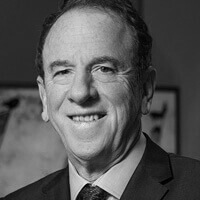
Host: John B. Quinn
Founder and chairman, Quinn Emanuel Urquhart & Sullivan
Share this episode:
Episode transcript:
Note: This transcript is generated from a recorded conversation and may contain errors or omissions. It has been edited for clarity but may not fully capture the original intent or context. For accurate interpretation, please refer to the original audio.
JOHN QUINN: This is John Quinn, and this is Law, disrupted. You know, our law firm is a firm of, I say we’re not an American firm per se, we have 36 offices around the world, and on this podcast I’m afraid we haven’t gotten to talk often enough or as much as I would like with some of our partners in our offices outside the US.
We’re going to partially remedy that today. I’m speaking with… we’ll be speaking with two of my partners based in Brussels, Miguel Rato and Marixenia Davilla, both of whom specialize in what we call antitrust law, and the rest of the world calls competition law, in Brussels. Brussels is a very important, center for, in the EU, for competition law.
What we’re gonna be talking about today is a case that Miguel and Marixenia litigated in the English Competition Court, and they’re gonna have to tell me how two lawyers from Brussels wound up doing that. The case was for our longtime client, Qualcomm, that was sued in the UK, in a class action, what they call an opt-out class action, which is like a US style Rule 23 class action.
In other words, the class members are in the case unless they opt out.
JOHN QUINN: A remarkable thing about this case is that after the trial, the other side raised the white flag. You don’t ever see this. At the end of the trial, they said, “Enough. We’re done. We want to end this case now.” I think that never happens.
You try a case, and at the end of the trial before there’s a decision, the other side raises the white flag and says, “No more.” And I’ll let Miguel and Ma- Max… You go by Max too, right?
MARIXENIA DAVILLA: I do go by Max as well.
JOHN QUINN: Yeah. Yeah. So I’ll call you Max from now on.
MARIXENIA DAVILLA: Perfect.
JOHN QUINN: I’m gonna let them introduce the case, what the case was about, and explain how two lawyers from Brussels got involved in this case pending in the UK.
Why don’t you begin, Miguel?
MIGUEL RATO: Thank you. Thank you very much, John. A pleasure to finally be invited to your podcast. It’s great. So this is a case before the Competition Appeal Tribunal, in London, a rather prestigious competition law tribunal in Europe.
And initially, it starts as a claim alleging abuse of dominance on the part of our client, Qualcomm.
JOHN QUINN: If you would, Miguel, I know that’s a word that’s used in the EU and elsewhere, but abuse of dominance as a phrase, that sounds strange to the ears of American antitrust lawyers.
What does that mean? I think we can probably all guess, but…
MIGUEL RATO: Yeah. It’s like Section 2 of the Sherman Act. You know, it’s unilateral conduct, right? It’s prohibited unilateral conduct by a company in a dominant position, which is a European concept. Essentially, it means that you have market power.
JOHN QUINN: So in other words, basically, as in the US, it’s okay to be a monopolist if you do it fairly fair and square, but you cannot become a monopolist or maintain a monopoly by engaging in anti-competitive activity. Is that essentially it?
MIGUEL RATO: Yeah, that’s exactly it. Now, there is one main difference, which is under the Sherman Act, the conduct that is frowned upon is the exclusion of rivals.
Well, in Europe, we have something additional to that, which is liability can also attach to behavior by this monopolist that results in the exploitation of consumers or of customers, so charging high prices or, as we call them here, unfair or excessive pricing. That does not exist in the United States under the Sherman Act.
And that is, that is very important, for this case because essentially this was the theory of harm in our case, that Qualcomm had essentially imposed, they had managed to impose royalty terms, licensing terms, essentially on Apple and Samsung. It was charging them too much, and that this was exploitation, and that this essentially translated into higher consumer prices.
So it wasn’t that Qualcomm was excluding, that was not the allegation. It was essentially that it was charging what the claimant called super competitive royalties.
JOHN QUINN: All right, so that’s the essence of the complaint in the class action then?
MIGUEL RATO: Yes. I mean, they, they were essentially arguing that Qualcomm was using its position, its market power as one of the world’s most important suppliers of baseband chipsets, you know, the chipsets that go into mobile phones.
That it was using its position in the supply of these chipsets to essentially coerce, to force some of the smartphone makers to take licenses because these smartphone makers, they also need to take a license to Qualcomm’s all important standard essential patents, coerce them to take licenses on terms demanded by Qualcomm.
So that was the claim, you know, in a nutshell, they were arguing Qualcomm goes to the smartphone makers and tells them, “You know you need to take a license to our IP, right? Well, if you want to buy our chips, before you buy our chips, you need to take a license on these terms.” And so it was a claim of leveraging.
Qualcomm had leverage over them, has them over a barrel, and they accept to pay these super competitive, unreasonable excessive royalties. That, in a nutshell is the case.
JOHN QUINN: Yeah. As we discussed beforehand, it sounds to my ears very much like what we would call a tying claim. But Max, how did we get involved in this case?
MARIXENIA DAVILLA: We got involved from the inception of the case five years ago. So, Miguel and I were actively involved in crafting Qualcomm’s defense from day one, and we continued advising until the end. Just one pause to clarify or add perhaps to what Miguel said about the theory of harm in this case and why it is so important for our client.
Because essentially, it concerned and affected two of its core business practices. So Qualcomm is a primarily, an innovator, a technology company, and since the dawn of time, it had in place two practices, that it considered necessary to innovate, to continue innovating, to gain a fair return on its investment, to avoid any patent infringement issues, et cetera.
These practices essentially are selling chipsets only to licensed customers and licensing its patents at the end device level as opposed to intermediary levels. So the claim in this case, which was brought by a consumer association called Which?, really targeted these two practices, primarily the first one that I just mentioned.
So it’s a significant victory for us and for the company. How did we get involved? So we advised Qualcomm now for, well, Miguel, how many years? Twenty years, me fifteen, so we are their, I’m happy to say, their trusted advisors in Europe, and we know their business inside out.
We’re very familiar with their products, with their chipsets, with their licensing, their licensing agreements, the way everything operates. I’m happy to say, we worked very closely with the in-house Qualcomm team.
JOHN QUINN: How did you get involved with proceedings that are in the UK? I mean, is that unusual, that lawyers such as yourselves based in Brussels would appear in the specialized antitrust court in the UK?
MIGUEL RATO: It’s somewhat unusual. When the case was brought, it alleged not only a breach of UK competition law, but also of European Union competition law. All of this would have been academic ten years ago because essentially before Brexit, before the UK left the European Union, essentially their competition law was European Union competition law.
Since Brexit, obviously, they have diverged somehow, but when, when the case was brought, because of the timing, the claim was still involved, a breach of European Union law. And so the substantive aspects of the law were identical. And hence, because we have been advising Qualcomm for such a long time, you know, they thought that we were best placed to also to assist them with this.
JOHN QUINN: Did you have to get some special permission from the court to appear?
MARIXENIA DAVILLA: Oh, so that’s something… no, we could not plead before the court, unfortunately. We’re counsel of record, but we use barristers as is customary.
JOHN QUINN: I see …
MARIXENIA DAVILLA: In the United Kingdom. So we worked with Brick Court Chambers, and also had solicitors from Norton Rose Fulbright, who dealt with the issues over there.
And we also collaborated very closely with an economic consultancy, Compass Lexecon, who also prepared expert reports in this case, and we will get to that, in due course about the substance of the defense and all the arguments we put forward to advance our-
JOHN QUINN: Let’s turn to that now. I mean, so Qualcomm’s charged with the allegation is that they’re charging exorbitant prices.
They’re exploiting their monopoly power to get rents that they shouldn’t be entitled to in a more competitive market. How did you… what was the defense that you constructed?
MARIXENIA DAVILLA: Yeah. Just perhaps one thing to mention up front is that the case morphed several times, so the claims morphed several times, and they kept evolving as the case went on.
To give you an idea, the claimants, the class representative, class representative’s, opening statement, during trial was very different compared to his closing remarks. And so we had to essentially disentangle and clarify what the key issues were because there was a lot of noise, a lot of peripheral allegations that actually confused the matters more.
JOHN QUINN: So it was like any other case. I mean, most cases, the way you’re describing.
MARIXENIA DAVILLA: Well, yeah, exactly. But because of the technical aspects of it became quite unwieldy at some point. So this case essentially, we had to focus on the facts, the key facts concerning Qualcomm’s negotiations and agreement and licensing arrangements and chipset supply arrangements with Apple and with Samsung, two of the world’s largest device makers.
And I think it was Mike Karlinsky who mentioned in his talk a few days ago that, you know, some things, you know, sometimes you just need to make arguments that make common sense. And in this case, I think this proved, it, well, proved to be true in the sense that looking at the chronology of events, the class representative’s theory simply could not hold.
And why I say that is the following reason. Qualcomm, or rather those, well, those customers, first were able to have a license with Qualcomm, at times when they didn’t yet purchase any chipsets from Qualcomm, and, subsequently did they start purchasing. So there was no possibility to leverage any dominant position at this initial stage, at least as regards Samsung that was licensed already back in 1993, and only started buying chipsets much later down the line.
And as regards Apple, it was even a more special situation in that it was able to source chipsets without even having a license in place, but relying on its contract manufacturers, the companies that make its phones for it, such as Foxconn and Pegatron, and was able to remain in that situation until 2019.
So in a nutshell, the alleged practice that the claimant focused on, the so-called no license, no chips policy, as they called it, simply did not apply for these crucial arrangements. And we pointed all these facts out very early on. So, our defense really focused on what truly mattered, and that was leveraging even possible.
Now, of course, one can argue, “Well, how about any renegotiations of licenses during, you know, as time went by, any amendments to the terms?” And even then we dissected all the facts of the case to show that there was no risk of Qualcomm ever threatening or, or withholding chipset supply such that it would be able to exert some leverage over Apple or Samsung.
They both had their arrangements in place. They both were able to challenge royalties actually during that period. There was no tie between licenses and licensed products such that, if, for instance, Samsung negotiated the license for product A, it could no longer buy chipsets for product B if it was already covered by an existing license.
So, essentially what we did and what our role was, was to clean out and block the noise and focus on the essential elements of licensing, how Qualcomm conducts its business, how the licenses actually work, and what the terms were. And similarly with the economic analysis that we helped prepare, the notion there was to show whether there was any link between the level of the purchases or the degree of alleged dependency of a customer on Qualcomm’s chipsets and the level of royalties ultimately agreed.
And what our experts, Dr. Padilla’s report showed is, was that there was actually no evidence of such a link between chipset supply and royalties agreed.
JOHN QUINN: All right, so purchasing, you were able to show that ch- purchasing chipsets did not affect the license royalties. You were able to show that there were customers who got royalty, who got licenses without purchasing chipsets and I assume the vice versa as well at different points in time.
MARIXENIA DAVILLA: Yeah, that also holds true. There were customers who had a license, who didn’t purchase chipsets. There was Apple who purchased chipsets without a direct license. And what is more important is even at times at which Apple and Samsung purchased high volumes of Qualcomm chipsets that had no impact on the level of royalties.
I know no higher, not an increase in the level of royalties.
JOHN QUINN: So Miguel, tell us about the trial. How did the trial go? I understand that the trial was bifurcated. Yes. How were the issues bifurcated? How did that come about?
MIGUEL RATO: It was a rather unique bifurcation.
We had a split trial. We had trial one that would deal with the most of the issues that are customarily dealt with when you have a split trial like this. You start dealing with, you know, what’s the market, right? Market definition. Then you go on to dominance, which is essentially the assessment, you know, did the company have market power?
Then you go on to the assessment of the theory of harm and essentially a finding of liability. And then if the court finds that there is liability, you can have a second trial in which you deal with the question of, you know, the damages, the quantum, and any apportionment. Well, ours was…and it’s not necessarily the case.
Most trials, all of the issues are dealt with in one fell swoop, they don’t necessarily go to a split trial. But when they are bifurcated, that’s the normal bifurcation. Ours was different because we’d go through market definition, dominance, the theories, et cetera. At the end of the day, in trial one, the court would have to answer the question whether the conduct as alleged could result in a breach of, you know, the prohibition on abuse of a dominant position.
And then the question would be after that, if it found that in fact, yes, the conduct could result, had the potential, had the capacity to result in anti-competitive effects, would the reasonableness of the royalties ultimately charged be a defense? In other words, assuming that Qualcomm did all of the things it was accused of doing, could it then say, “Well, but who cares?
Because ultimately the licensing terms were fair and reasonable.” So the court was also going to answer that question. If the court answered in the affirmative, yes, that is a defense, that would be the end of trial one, and you’d go to a trial two.
JOHN QUINN: What you’ve described is phase one of the trial.
MIGUEL RATO: Yes.
JOHN QUINN: And, and if it went on, what would be the, the, the next issue would be damages or what’s a reasonable royalty or what?
MIGUEL RATO: The second part would be, now let’s look at whether the royalties charged to Apple and Samsung were in fact reasonable.
JOHN QUINN: Okay.
MIGUEL RATO: It would be that followed by quantum. If the court were to conclude that the royalties were unreasonable, then you would have damages. So it was a very unique thing
JOHN QUINN: Right. So you tried the first part of it, the first phase, as described, and how did that trial go?
MIGUEL RATO: Well, that went, for us, splendidly. It lasted five weeks. It was very intense, you know, whole days before the Competition Appeal Tribunal, three judges panel, you know, probing questions, expert reports. You know, in the UK system, that only the barristers have the right to stand up and speak, so the solicitors, they sit just behind them, and we communicate, you know, with the instructing solicitors, communicate with the barristers, which sometimes makes for, you know, some, you know, sort of, you know, interesting shenanigans in court.
JOHN QUINN: What’s an example of an interesting shenanigan? You piqued my interest.
MARIXENIA DAVILLA: Lots of stickers. Lots of stickers come in.
JOHN QUINN: Oh, yeah, stickers. You know. Yeah, yellow Post-Its.
MIGUEL RATO: Post-Its.
JOHN QUINN: Okay. Yeah, we do that, too. All right. So you thought that the initial phase of the trial went very well, and did the judge reach a decision, or what happened?
MIGUEL RATO: They never…the judge did not reach a decision, so in, we concluded after five weeks, closing statements. We thought it had gone splendidly, but obviously, you know, this is litigation.
You know, you never know. Sometimes you get it wrong. The judges hold their cards close to their chest. We thought there were good indications. We were optimistic. And then, the judge was known very, you know, the, president, Dame Kelyn Bacon, who was known for writing judgments, rendering judgments rather swiftly had, you know, indicated that she would be then writing the judgment.
And before judgment was handed out, we reached an agreement as with the claimant, a drop hand settlement, whereby the class representative would withdraw its application, and each party would bear its own cost. So no money would exchange hands, Qualcomm would not pay a dime, and we would never see the final judgment, and we would never have a trial two.
JOHN QUINN: So the other side just threw in the towel?
MIGUEL RATO: That’s one way of putting it.
JOHN QUINN: That’s a remarkable result to take the case all the way through trial, at least the initial stage of trial, and then they decide to raise the white flag.
MIGUEL RATO: Yes. Essentially it saves them, it saves them some portion of Qualcomm’s costs, which they would have then to bear were they to lose. So that was the financial incentive for the claimant to do so at this stage. They would not have an adverse ruling on costs, and, you know, the costs were not insignificant.
Qualcomm’s legal defense, as you can imagine in these cases, was, you know, substantial.
MARIXENIA DAVILLA: And they could also increase where one to have appeals, following trial one, for instance, which was possible.
JOHN QUINN: Well, that’s a really remarkable outcome. Congratulations to both of you.
Really interesting to get some insight into competition proceedings and class action proceedings, which are a relatively new thing in the UK, I know. But congratulations on that fabulous result. Doesn’t happen very often that after trial and before the judge decides, your opponent decides to– they’ve had enough.
MIGUEL RATO: Yes. I think, you know, we had then a separate proceeding to deal with, and the court has to approve the settlement, or rather the court has to approve the withdrawal of the application, and it’s heard by a different judge. And the judge essentially says that, you know, his view was that the chances of the claimant winning this case were negligible.
And therefore, you know-
JOHN QUINN: He let them withdraw.
MIGUEL RATO: Yeah, he let them withdraw.
MARIXENIA DAVILLA: Yeah. To quote, “There were no realistic prospects of success.” And so while the, you know, test in the UK for approving a settlement is whether the settlement is fair and just for the class. And so the judge who looked into the settlement found that it was neither here nor there for the class, that the case would fail, would in all likelihood fail.
So he also looked at the balanced the interests of all the other parties in the proceedings. So class representative, Qualcomm’s legal costs as well insurers, funders, et cetera, and he found that it is in everyone’s interest to settle. Yeah.
MIGUEL RATO: Call it a day. To, yeah, to call it a day.
JOHN QUINN: All right.
All right. Thank you both.
MIGUEL RATO: Thank you, John.
MARIXENIA DAVILLA: Thank you, John.
JOHN QUINN: So this is John Quinn. We’ve been speaking with my partners, Miguel Rato and Max Davila from Brussels about the fantastic victory in the Competition Court in the UK for our client, Qualcomm. This is John Quinn. This has been Law, disrupted.
Published: Jun 8 2026