





With: Matthew Borden and Kory DeClark
Partner and co-founder of BraunHagey & Borden, and partner at BraunHagey & Borden
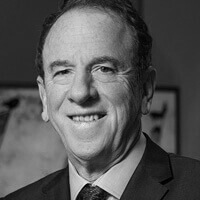
Host: John B. Quinn
Founder and chairman, Quinn Emanuel Urquhart & Sullivan
Share this episode:
Episode transcript:
Note: This transcript is generated from a recorded conversation and may contain errors or omissions. It has been edited for clarity but may not fully capture the original intent or context. For accurate interpretation, please refer to the original audio.
JOHN QUINN: This is John Quinn and this is Law, disrupted and we all know about the protests around the country, to the actions of ICE and the DHS, the actions the federal government has taken.
People have protested around federal buildings and elsewhere. And today we’re gonna be talking to two lawyers who have obtained injunctions against DHS and other government entities, that limit their ability to use force and how they can respond to these protests. The lawyers we’re talking to are Matt Borden and Kory DeClark of the BraunHagey & Borden firm, I think both of you in your San Francisco office.
Is that right? And we’re gonna be talking about a case, which is known as the Dickinson case, the first named plaintiff, where they obtained an injunction against how the government responded to protestors in Portland. And maybe you, Matt, maybe you could just talk and tell us about what this case was about.
MATT BORDEN: This case is about the right to peacefully protest against the government, and all our clients are people who have gone out in in Portland to protest against the immigration raids and other conduct by the federal government. And the focal point of these protests is the ICE building in Portland. And they have been, you know, since June of last year subject to repeated acts of violence that is, you know, indiscriminate, excessive, and unnecessary. And we documented this pattern and presented it to the court, and the court issued an injunction that is designed to cure the chill that’s caused by this retaliation.
JOHN QUINN: So how did you go about collecting the evidence and what did the evidence consist of?
MATT BORDEN: So we’ve done a couple of these cases and the evidence collection is the very, very important part of this and we collect evidence by just interviewing a lot of people. We get declarations. We presented 62 declarations in this case. In other cases, we’ve presented sort of equal numbers. Courts have called it, I think the Ninth Circuit called it a mountain of evidence.
In one case, in Los Angeles, the court called it an avalanche of evidence, but these declarations along with videos, of the actual protests of the conduct by the federal agents, which in many cases was blatant, you know, just spraying a person, a peaceful woman in the face with pepper spray for simply talking with officers, spraying protesters who are sitting, you know, peacefully on Martin Luther King’s birthday, you know, they’re just engaged in passive resistance, sitting in the driveway, not even blocking the driveway of the federal facility, spraying them like they’re watering plants. These are, you know, dangerous chemicals and it is causing injury and it’s definitely inhibiting people from doing things that they’re allowed to do under our constitution.
JOHN QUINN: I would imagine that spraying people with pepper spray alike would inhibit people from showing up and protesting. Kory over how long a period of time were you collecting this evidence?
KORY DeCLARK: You know, it’s funny, when Matt was talking about the evidence collection process, I was remembering that it happened at least for the LA Press Club case, which is the LA’s version of this that we’re currently litigating. We decided to do the case just after our summer program had started at the firm.
And so we had four summer associates. We had several summer interns and a bunch of attorneys at the office who were excited about the case and wanted to dive in, and we had to collect for that case a lot of evidence in a very short period of time. And so the office in San Francisco is extremely active.
We had I think at one point there were 15 of us that were jumping on phone calls, talking to anybody that had been at these different protests, coordinating with our ACLU partners who we’re working on that case with and trying to map out where these ongoing protests were happening all at the same time.
So it was really, it was a complicated series of events, required an enormous amount of organization, and I mean, I think we were able to do it as well as we were, only because we had these summer interns and teams of associates and other folks at the firm who wanted to, who wanted to jump in and work long hours for a couple weeks to make it happen.
JOHN QUINN: How did you identify the protestors? How did you identify the people who ultimately signed declarations? How did you find the videos that you used as evidence?
MATT BORDEN: So a lot of the videos and as you know, some of the videos at least get put on social media. Another fact is that we have represented traditionally a lot of reporters and, you know, legal observers, and those are both very fertile sources of people who are documenting. They’re taking videos, they’re trying to come up with evidence because legal observers, what they do basically is they report to organizations of lawyers, on what the government is doing.
JOHN QUINN: Was this over a period of months that you were collecting this evidence?
MATT BORDEN: I would say, you know, it happened really fast. Yes, in Portland there was, it was an interesting kind of ebb and flow. There was a lot of protest activity around the time that there was very little protest activity. Then there became a lot when they brought in the National Guard and then it kind of ebbed again. I think all the activity was, you know, very peaceful. And this has been documented by a couple different judges. And it was very contrary to the narrative that the government was putting out. And that’s also a part of these cases. So there was a time where it was kind of, I would say not very urgent in Portland. And then all of a sudden things began to ramp up.
JOHN QUINN: It became very urgent as thing things came to a head, so you went out, you had some associates, interns, and presumably lawyers contacting people, and people I assume, refer you to other people, and you just sort of follow the chain and you collected, how many declarations did you say or affidavits testifying as to what they saw, what they observed, how they were treated.
MATT BORDEN: We collected 62 declarations that we submitted in Portland. We also presented three days of live testimony and that was the evidence from our side. We also, at the same time, took depositions of line agents and supervisors from the federal government and presented.
JOHN QUINN: That was done on an accelerated basis in support. This was a preliminary injunction, I assume, or was it a permanent injunction?
MATT BORDEN: It was a preliminary injunction. We got a TRO based on declarations, and then we did 28 days of very intense discovery. Sometimes a couple depositions a day. These cases are very intense, this process of having to gather up all the evidence, having to present all the evidence, doing expedited discovery, it’s almost like a trade secret case or something where you’re just going hot and heavy for a couple weeks. And that was definitely the nature of the one in…
JOHN QUINN: Kory, what was the government’s position? I mean, you’ve got all these declarations, you’ve got videos, I mean, what was the, how did the government respond to this?
KORY DeCLARK: I think Matt, so I was not at the evidentiary hearing in Portland, but Matt, how many witnesses did the government put on?
MATT BORDEN: Zero. Yeah, so I think the government’s position on these cases is they put in a couple declarations and they don’t respond to the specific evidence that we put on. So they didn’t explain why they shot 83-year-old Laurie Eckman in the face with a pepper ball. They don’t explain, you know, a lot of the conduct that we have sort of documented in the record. And instead they make these sort of more generalized statements that the protest was, you know, was violent. There were people throwing things at the police, there was all this other…
JOHN QUINN: Did they have evidence of that?
MATT BORDEN: Well, I, you know, their evidence is they have these use of force reports and their supervisors then did declarations attaching some of the use of force reports and saying like…
JOHN QUINN: Sounds like hearsay to me.
MATT BORDEN: It is definitely hearsay. Definitely lack of personal knowledge on their part. I mean, for the most part, like some of these supervisors were there on a couple occasions. But, it doesn’t, and this is part of, you know, one of the interesting tensions in these cases, it’s just because somebody, one person is doing something bad or a couple people are doing something bad, doesn’t mean that you can retaliate against an entire crowd of people. And tear gas especially I think is a blunt and inappropriate tool. Law enforcement has moved away from using it in protests. I would say good law enforcement agencies hardly ever use it.
JOHN QUINN: Well, I mean, I’m sure there were some, the government didn’t put on any witnesses in the preliminary junction hearing but I’m sure there were some challenges that you faced. Can you tell us about those?
MATT BORDEN: Yeah, so I think there’s a couple challenges in Portland. These are challenges that sort of permeate these protest cases. One of the challenges is the government always says, well, we have written policies that prohibit retaliation, and so how can you say that we’re retaliating?
And so part of what you have to prove in a case like this, and this is part of why we submitted 62 declarations and all the live testimony, is you have to show a pattern and practice of conduct that amounts to an informal policy or you know, even though they are, you know, have written policies that say you don’t retaliate, for example, in Portland, nobody ever got disciplined for violating those policies.
People were trained in such a way that they didn’t even understand what the policies were. Even their supervisors had trouble articulating whether, you know, Rosa Parks was engaged in passive resistance or active resistance by sitting in the back of a bus and refusing to move when you know officers told her to. So I think all those things go to proving the overcoming that retaliation piece. I would say another, you know, hard part of the cases is the police always say that this injunction is unworkable. It would be dangerous for law enforcement to follow it. You can’t curtail the way we use force ’cause what we’re really trying to do is protect law enforcement. And we had very good testimony in Portland. We had testimony from two commanders from the Portland Police.
They weren’t even our witnesses, really, they were Portland’s witnesses. They weren’t our experts, but they were certainly experts on public order policing, which is this art form of policing protests that is a little bit different than what federal agents typically do and you know, Portland’s a city where they have a lot of protests and their police have studied that.
JOHN QUINN: So you actually put on evidence about what the local Portland police do, what their practices, they’re dealing with protests and how that was very different than what the federal agents were doing.
MATT BORDEN: That’s correct and especially with regard to tear gas. We also had an expert Gil Kerlikowske, who’s been an expert in a couple of these cases. He’s the former commissioner of Customs and Border Protection. He was also police chief in Seattle. He has handled, you know, hundreds of big, messy, you know, difficult, you know, 60,000 person protests.
And, you know, he also testified about use of force and how to correctly police these situations. One of the things that people I think don’t really understand very well is that tear gas actually escalates a crowd and I guess I would give you this example, like if you went to, you were sitting at a warrior game and somebody threw a water bottle at a referee, and then the security came and teargassed everybody in the section, people would be very angry because if they didn’t deserve it, there’s one person, you know, who’s doing something that’s wrongful.
And I think that you know, if the security came down and actually pulled out the one person who was the offender, I think people sitting in that section would probably be glad, or at least they would, you know, feel that it was just, but if you treat crowds in an unjust way, you will inflame ’em.
And that is what we’ve seen from DHS over and over and over again, is that the way they police these situations is they’re inflicting violence on people who don’t deserve it. And it creates more problems and more danger for the police officers themselves.
JOHN QUINN: I’ve always wondered what training these ICE and DHS, other DHS Protective Services agents get and whether they get the quality of training that local police do. I mean, did that, was there evidence about that in this case?
MATT BORDEN: That is one of, you know, the focuses of Mr. Kerlikowske’s testimony, but it’s definitely true. Like he told me that when he was at Customs and Border Protection, that they didn’t really have protest training and the training that he got was more like dealing with a prison riot, which is a different situation. When you have, you know, civilians out there in a dense, urban setting, and many of them are peaceful, and some of them might be 84 years old or they’re going out there with their church group like the Eckman’s, or they’re bringing their children like some of our other clients, you know, they, you have to police it differently.
And, you see, like the local police and the Portland police officers who testified, an officer from the Oregon State Police who testified, they all said that, you know, there’s a lot of good ways to police these protests and the feds are not doing it and they’re not really trained to do it either.
JOHN QUINN: Was there evidence about what training these federal agents do get?
MATT BORDEN: There was evidence about what training the federal agents do get, there is a protective order in the case and they consider their training to be sort of…
JOHN QUINN: Confidential?
MATT BORDEN: Confidential.
JOHN QUINN: You can’t talk about that.
MATT BORDEN: I might not be able to. I might be but I just, I don’t want to get sideways. Yeah.
JOHN QUINN: Don’t wanna be tear.
MATT BORDEN: Yeah, exactly. It’s inhibiting my speech.
JOHN QUINN: I understand you got testimony from Christie in the case.
MATT BORDEN: We didn’t get testimony from Kristi Noem and you know, we would, we would love to you know, there’s an apex witness kind of problem in that case, but we do have a lot of public statements by her and the administration that we relied on in that case and have relied on in others where there, statements that are just like blatantly false, like the things that they were saying about Alex Pretti, like he was brandishing a weapon.
And you know, when he clearly wasn’t, everybody can see the video. And I think that’s also a form of ratification that we have used and brought to the attention of courts in these cases. We did get testimony from one of the supervisors, you know, the sort of ultimate FPS supervisor who talked to secretary Noem and said that she told him that he was doing a good job and she was happy with the tactics.
JOHN QUINN: I guess that’s what I read that the referring to that testimony, she said she was doing a good job. Was there any evidence about whether federal agents, Kory, if you know the answer, are there any evidence about whether they were disciplined or what the government did, or were they just basically saying everything’s fine in terms of how these agents behaved and handled these protests?
KORY DeCLARK: I mean, that’s, I think one of the most powerful pieces of evidence is that there’s no records of discipline, there’s no records of investigations, all the things that you would expect to be true, if in fact they did not have this defacto policy are, are not true and they, and they can’t show any evidence that they’ve pursued those routes.
JOHN QUINN: Well, I’m trying to grasp, I’m trying to understand what the government’s position was here in the preliminary injunction hearing. They, I mean, you’ve told us that they say that, you know, entering this injunction about how they can’t use force or limiting the use of force is unsafe for law enforcement, because I assume they’re gonna say, look, people have to decide on the spot, they have to defend themselves. They have to defend their colleagues. And the tear gas is sometimes necessary, and there’s no way for this court to police this. Our people, our agents, have to be able to make these decisions on the spot. At the time, was that basically the government’s response to your case?
MATT BORDEN: That is a lot of their response to the case. I think they, you know, the combination of that and you know that some protesters were doing things that, you know, threaten law enforcement, like throwing water bottles or rocks or fireworks or other things. So, but yes, that is their position. The thing is that, you know, all these police officers who testified, and Mr. Kerlikowske, that is kind of what police do is they make split second decisions.
They’re trained on that. And if they’re trained to, you know, behave appropriately towards protesters, they can do that too. And many police around the country and, you know, have policies that are that are similar to the injunctive relief that we ask the court to impose. And the policies themselves, I mean, the injunctive terms are very similar to the terms of the use of force policies that the federal government itself is supposed to be following. So, that’s been our comeback to the workability and the safety issue. I will say, like in index newspapers in 2020, our firm obtained…
JOHN QUINN: That was the previous case that you did in Los Angeles, relating to the handling of protests.
MATT BORDEN: Index newspapers was the first case that we did, and it was in the 2020 protests in Portland and we prevented, we got an injunction against DHS, the US Marshal service to stop them from dispersing reporters and legal observers. And one of the interesting features there was, there would be a time, you know, I don’t know if you remember, but there was like a hundred days of protest in a row in Portland, and it had kind of captured a lot of national attention and there was always a time of those protests where the federal government would say like, look, this is, you know, this is unsafe. It’s an unlawful assembly, you have to leave. And then they would just start, you know, behaving violently towards protesters. But they were also attacking reporters. And so reporters couldn’t sit there and film what the government was doing and they couldn’t document it.
And there started to be a one-sided message coming out of the administration where, you know, the government was saying these protests are violent. Protestors are violent. And we wanted the free press to be able to participate in that, to offer an alternative perspective to the government. We said, you can’t just monopolize the marketplace of ideas in that way. And the court agreed with us. And so it imposed this injunction that required the federal government to let reporters sit there even as they were dispersing other people.
JOHN QUINN: Was this, that was, we’re talking about this earlier case that you did at…
MATT BORDEN: That’s the earlier case, but the interesting thing of that is that injunction was in place for a long time and it never caused any harm to anyone. They were never able to document any instance where any police officer did something, was injured by a reporter, was injured by someone who they hadn’t dispersed or had, you know, was put into an unsafe situation. And the same was true for the injunctions that we, when we extended out the precedent that we created in index newspapers in the LA Press Club case in Los Angeles. They were unable to show any harm to law enforcement resulting out of that injunction.
And then in Portland when we, you know, had a similar injunction, the judge pointed out and made findings that, you know, after he issued his TRO for like the last month, they were unable to demonstrate any harm whatsoever to law enforcement or any danger to anybody or any increased amount of injuries. And in fact.
You know, in the time that that TRO was in place, there were less violent incidents and, you know, things were relatively peaceful, you know, and I think the part of it is that a lot of this violence is instigated by the federal government, and once you take away that tool, things are a lot calmer and it’s safer for them.
JOHN QUINN: In the preliminary injunction hearing, I assume that you called protestors to testify as to what happened. Did the government cross examine them and if so, what did the cross consist of?
MATT BORDEN: You’re a trial lawyer and you know when an 83-year-old woman gets up there and says, they shot me in the face with a pepper ball and…
JOHN QUINN: There’s not much cross.
MATT BORDEN: Yeah, there’s not much cross you should do. Let’s just put it that way.
JOHN QUINN: Right. So you had a three day hearing, and how long, you got the preliminary injunction? What does the preliminary injunction provide in essence?
MATT BORDEN: The preliminary injunction says that use of force should really be limited to when somebody is posing an eminent threat of harm to law enforcement. So there’s a number of crowd control weapons that they have. And some of ’em are like projectile weapons, like a pepper ball gun. Like you’re really only supposed to shoot at somebody with pepper ball gun if they’re, you know, posing an eminent threat to you because that can kill someone. And that’s been documented. So save that for the sort of worst of the worst. And then, you know, if somebody is engaged in active resistance, which is a term of art for law enforcement.
JOHN QUINN: What does that mean?
MATT BORDEN: So, for example, you know, and I’ve watched a lot of protest videos and, you know, seen a lot of this evidence, and there’s one common situation that I would call active resistance, is the police go to arrest someone, and then that person’s, you know, friends or whatever are trying to stop the police and they’re interfering with the arrest or they’re grabbing officers. So at that point, you’re allowed to direct some pepper spray at the person who is engaged in that conduct. And that’s active resistance.
JOHN QUINN: So, I mean, did the injunction say anything specifically about the use of tear gas?
MATT BORDEN: Yes, it, I mean, it says two things about the use of tear gas that I think are really important. One is that you can’t use it on people for trespassing, and that you can’t use it on people for passive resistance. And so one of the big issues in this case is that there’s a federal building. The driveway is federal property. Sometimes people go onto the driveway and the government wants them to leave. And so, you know, there’s a lot of ways that you can make people leave. And what they have been doing is just like, you know, indiscriminately, tear gassing people who were out there, there’s much better and nonviolent ways to make people leave, including just asking them as a first step and then if they don’t do it.
Our expert described a, it’s almost like a, you know, the police form a skirmish line. They have shields, they have long batons, and they just, they march forward together in a formation. And for a small area, like a driveway, it’s like they just keep pushing back people.
JOHN QUINN: That’s effective.
MATT BORDEN: It’s like an old school policing technique that’s tried and true. There’s also another, it’s almost like a football play almost, ’cause everybody has to be, you know, in the right position. And in fact, I’ve even heard it called scrimmage lines by some people.
JOHN QUINN: In this, in the injunction, under what circumstances is tear gas permitted?
MATT BORDEN: If there’s an imminent threat of harm to law enforcement, so you could imagine a situation like, you know, the Rodney King riots or something like that, where people are smashing a storefront and trying to steal things out of, you know, the Nike store or something. The, like, if you have a whole group of people that is doing something that is going to be, you know, an imminent threat of danger. They can use the tear gas, but otherwise, you know, they have the capacity to arrest people. They have the capacity to clear the driveway. They have the capacity to protect the building in an infinite number of other ways.
KORY DeCLARK: I think that’s, actually, if I could just zoom in on that for a second ’cause I, it’s interesting you asked that question, which is a question that’s come up in a lot of variations over the course of the last year as we’ve been preparing for different arguments. And it also, I think, relates back to a question you asked earlier about what the government’s defense here was.
And as somebody who knew very little about this before I got involved with these cases at all, I think I had this idea which the government really tries to play up in their briefing that what these protests look like. I guess it’s twofold. First, what the protests look like are riots. Then second, if you grant an injunction that limits in any way what the government can do during these riots, they’re basically defenseless and they won’t be able to protect themselves and they’re gonna be harmed.
And both of those things are once you actually see the videos of what’s occurring, and you hear the testimony couldn’t be farther from the truth, so, first, the protests, like Matt said earlier, are overwhelmingly peaceful. And even when they’re not, it’s not as though there is a large mass of people that are breaking the law.
There’ll be a very small number of people who, are actively resisting in a way that moving to the second point, the government, when properly trained, can really handle effectively. So the question, I mean, this has come up in moots and other things, but you know, how can you judge some of these arguments, ask these same questions too, but how can you expect the government to get hit, say with a Molotov cocktail from a crowd and they don’t know where it came from?
How can you expect them to just identify the person and deal with that one person without tear gassing the whole crowd? Like, shouldn’t they be able to protect their lives? But that’s actually not what happens at all. They can almost always see who individuals are. It’s almost never Molotov cocktails.
It’s the sort of active resistance that Matt was talking about. And then there is an escalating series of things that they can do before they get anywhere near something where tear gas and they basically never need it. It’s extremely rare that they would ever need it. So what happens is you identify the person in the crowd, you send officers out, people generally move out of the way and they arrest the person that they saw break the law.
And going back to a point Matt made really early in this conversation, when it happens like that, people sort of understand why that person is being arrested. And it deescalates the situation rather.
JOHN QUINN: Not in, you’re not inflaming the crowd by just tear gassing everybody. You’re treating everybody the same for one person’s conduct.
KORY DeCLARK: So, exactly. So what you end up with in a situation like DHS where they’re untrained they, whether intentionally or not, by using the wrong tactics at the wrong times, they make the situation so much worse, both for the crowd and for themselves, if they were just properly trained and followed, not just the injunction.
But the actual policies and procedures that are written that are coterminous with the injunction, they would be deescalating the situation, protecting themselves adequately. And we could continue having these peaceful protests without anybody getting hurt. But that’s not what’s happening, and that’s the need for the cases in the first place.
JOHN QUINN: So where will this case go from here? Are the plaintiffs seeking damages, or just a permanent injunction or what’s going to happen?
MATT BORDEN: We’re seeking a permanent injunction. They have appealed. You know, they filed a motion to stay the injunction. The Ninth Circuit, granted an administrative stay of the injunction until the motion to stay the injunction can be heard. We’ve seen that happen before, they didn’t do that in LA Press Club. And I think it’s gonna go to a permanent injunction.
JOHN QUINN: But nobody’s, none of your clients are seeking damages.
MATT BORDEN: They may eventually, but that’s not the part of the case that I think we’re the most interested in pursuing. I think that they will have people to represent them in their tort claims.
You have some period of time to, I think it’s pretty long to file your tort claims
JOHN QUINN: I understand these cases that we’ve been talking about are part of a program that your firm has for, impact litigation as being part of your work.
Kory, can you tell us about that?
KORY DeCLARK: Well, our firm is, I think right now between 40 and 50 attorneys, and we have an office both in New York and San Francisco. But what’s really unique about the firm, and one of the reasons that I was attracted to it and eventually came over here about five years ago, I believe since the inception of the firm when it was Matt Noah. I guess what are called, what we would call pro bono cases, but they quickly identified if they’re gonna do these cases on the side, why would you take simply a pro bono case when you could take a pro bono case? That’s also an impact case by which we sort of loosely mean a case that’s gonna have maximum impact for a broader group of people or change the law in some way that’s gonna benefit a larger group.
And so if you’re gonna spend the hours, why not spend the hours and get the impact? And that was going so well that eventually the firm decided, well we should dedicate more of our firm-wide resources as we grow to this sort of practice. And the way that I sort of understood it and looked at it since I got here is there is a structural problem in firms where it is difficult because of how many people are involved in the way the firms are structured and the way the clients come in and so forth.
It is difficult to carve out a large amount of space for cases that are not just pro bono, but could take on a life of their own and take up a large amount of resources at the firm. And the experiment has sort of been how can you structure a firm so that it has an active, robust, meaty, sort of pro bono impact practice while still doing well financially with the commercial practice.
And I mean, the thing that I was most attracted to actually, when I first met Matt, was one of the first people I talked to when I interviewed at the firm and he told me that the goal was to prove that this concept works so that other firms out there in the world, out there in the US that are bigger and could have a much larger foot footprint than we can, would see this model and say, we can, you know, we can do well and do good.
And they would adopt something that looks like our impact practice and they would go out and do more of these types of cases than we can ever do because we get calls now at this point, we get calls all the time for different exciting cases that we just don’t have the bandwidth to take, and there are cases that we, we do seek attorney’s fees in a lot of our cases.
Actually, just in the last year, we’ve gotten two large fee awards won for an injunction. We got against Department of Corrections in Massachusetts for using faulty drug tests on prisoners’ legal mail. We got another one after a victory in the California Supreme Court in a case called Logan that had to do with the trial rights of nursing home residents, complicated sort of arbitration issue that we won with unanimous opinion.
But the impact practice again, in my view, has sort of been an attempt to prove to the world that you can have a successful, robust practice that takes on cutting edge civil rights cases, while still having a successful commercial practice. And we’ve taken, I mean, we have, I didn’t count before we got on here, but we must have over 14 active impact matters right now.
A lot of Sixth Amendment work. First Amendment work. We have a long history of doing nursing homes. This nursing home litigation that Matt is like one of the experts in California on, we do criminal justice work. We partner with UC Berkeley. We’re currently representing Mano Raju, who’s the head public defender in San Francisco.
He was recently held in contempt by the Superior Court because they have excess, excessive workloads and are unable to take new cases. And the court for the first time in California history is held a chief public defender in contempt for not taking additional cases, so we’re representing him on that.
That actually just happened a few weeks ago and we’re currently working on an appeal, so we were true generalists. We take on cases all over the the legal spectrum and generally our barometer for whether to take a case is just whether we think it’s going to have the maximum positive impact in the world, given the resources that we have to do it.
JOHN QUINN: Can you tell us about what percentage of your practice, whether by, measured by hours or something else, these impact cases represent.
MATT BORDEN: I would say, I would say probably about 20%.
JOHN QUINN: Big number.
MATT BORDEN: It’s a big number and I think that, I mean, we, it, you know, I think our firm has been dedicated to it, but I think it’s also, you know, part of what we wanna show is that it can be self-sustaining, like through attorney’s fees. And there’s a lot of other ways it gets paid back to us. Like through recruiting, through, you know, our clients saying, Hey, you know, we’re really glad that you guys are doing this. Like, we’ve gotten a lot of positive feedback about some of these protest cases, and courts themselves see that like, you know, that’s part of the commitment. And so I think that it has intangible benefits and so that’s been a good thing for our firm over time.
JOHN QUINN: Well, congratulations on your great work. We’ve been speaking with Matt Borden and Kory DeClark of the law firm, BraunHagey & Borden, an example for the entire legal profession. Thanks very much. This is John Quinn. This has been Law, disrupted.
MATT BORDEN: Thank you very much for having us.
Published: Apr 7 2026