






With: Matthew Borden and Kory DeClark
Partner and co-founder of BraunHagey & Borden, and partner at BraunHagey & Borden
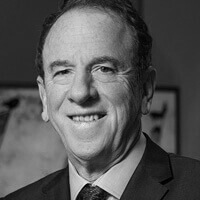
Host: John B. Quinn
Founder and chairman, Quinn Emanuel Urquhart & Sullivan
Share this episode:
Episode description:
John is joined by Matthew Borden, partner and co-founder of BraunHagey & Borden, and Kory DeClark, partner at BraunHagey & Borden. They discuss litigation challenging federal law enforcement responses to protests, focusing on the Dickinson case in Portland, Oregon, that resulted in an injunction restricting how government agents may use force against demonstrators. The case arose from a series of protests against immigration enforcement policies. The plaintiffs alleged a pattern of excessive and indiscriminate force by federal agents at these protests that chilled lawful First Amendment activity. The legal team assembled extensive evidence, including 62 sworn declarations and video footage, documenting incidents such as using pepper spray on an 82-year-old woman and firing tear gas and projectiles at peaceful protesters.
The effort to gather evidence was intense, involving rapid coordination among attorneys, staff, and volunteers to identify witnesses, collect recordings, and conduct expedited discovery in only 28 days. The discovery included depositions of federal personnel and testimony from experts and local law enforcement officials, who contrasted federal tactics with established crowd-control practices. The evidence demonstrated a broad pattern amounting to an informal policy inconsistent with constitutional protections rather than a series of isolated incidents. One powerful piece of evidence, in addition to the limited training that is much inferior to what police receive, was that the government conducted no investigations of and imposed no disciplinary measures on the officers involved in these incidents.
At the preliminary injunction hearing, the government largely relied on general assertions that protests were dangerous and that restrictions on force would compromise officer safety, while offering no direct rebuttal to specific incidents. In contrast, the plaintiffs emphasized that targeted, proportional policing methods were available and commonly used by trained local agencies, and that indiscriminate tactics such as tear gas often escalated tensions rather than restoring order.
The resulting injunction limits the use of force to situations involving imminent threats and active resistance. It restricts the deployment of crowd-control weapons against passive or non-threatening individuals. These constraints align with existing use-of-force standards and have not been shown to endanger officers when implemented. The government has appealed the preliminary injunction to the Ninth Circuit.
Finally, they discuss BraunHagey & Borden’s “impact” practice of focusing almost 20% of its work on pro bono activities on cases that could have the maximum impact for a broad group of people or change the law to benefit a large group of people.
Published: Apr 3 2026