





With: Robert Tyson and Cayce E. Lynch
Partners at Tyson & Mendes and Apex Defense Consulting
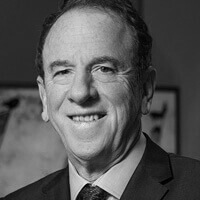
Host: John B. Quinn
Founder and chairman, Quinn Emanuel Urquhart & Sullivan
Share this episode:
Episode transcript:
Note: This transcript is generated from a recorded conversation and may contain errors or omissions. It has been edited for clarity but may not fully capture the original intent or context. For accurate interpretation, please refer to the original audio.
JOHN QUINN: John Quinn here. This is Law, disrupted and today we’re gonna be talking to Bob Tyson and Cayce Lynch, who are among other things, partners in a 280-lawyer law firm with a national practice. They’re based in San Diego. The name of the firm is Tyson & Mendes but that’s not all they do. I mean, they also have a consulting firm that’s developed out of their practice and the research they’ve done that we’re gonna talk about.
The name of the consulting firm is Apex Defense Consultants and, I guess this all started with Bob writing a book called Nuclear Verdicts: Defending Justice For All, which he followed up with his second book, Nuclears The Apex, I assume Break The Pattern, which is based on some research that he did focused on, you know, the nuclear verdicts, which are verdicts, wild, super large, plaintiff’s verdicts, and trying to understand what went wrong.
And in the process that is data based. We’re gonna get Bob and Cayce to talk about this. They reviewed a lot of cases and over a hundred trial transcripts to find out and discern a pattern of, a pattern of events. What goes wrong in these cases? And, first off, Bob, I mean, tell us how you really originally got the idea.
I understand you didn’t, you’re not claiming you’re the first one to use the phrase nuclear verdicts, but you’ve trademarked it. And how did you first get the concept of looking into these large verdicts from a defense standpoint and trying to figure out what went wrong from a defense standpoint?
BOB TYSON: Yeah. You know, thank you John. Thank you so much for having us on your program. I know Cayce and I are both excited to be here and it’s nice to meet you by Zoom, know you by reputation, of course. So, thrilled to be included in this. Thank you. So nuclear verdicts, you know, look, it, a lot of things come from our clients and, you know, for years, really the last 10, 15 years, nuclear verdicts have started to take off.
You know, they were called runaway jury verdicts, and then, some folks started to call ’em nuclear verdicts. And, we coined the term mostly to bring attention to it and to highlight it for our clients. And, you know, so many clients have just really been complaining about juries today and, you know, lack of tort reform, litigation funding, attorney advertising, and quite frankly, a lot of this stuff we can’t control, John. Yeah, we can write our congressman like, Hey, could you do tort reform first in California? They’ll just tear that up, right?
But I mean, you could do it across the country and try to change the laws in all of the 50 states, but it’s only as good as till the next administration comes in. Maybe they change tort reform, you know? So all of these things that they’re complaining about really seem to avoid the central issue in my mind, which is, these nuclear verdicts, which are a cause of social inflation. Social inflation is a term that was coined by Warren Buffet, I believe in the seventies. And social inflation is that amount of inflation and expenses that go up for insurance companies that is above typical inflation. So if inflation’s 3%, but insurance expenses are going up 10 or 15%, that’s called social inflation.
The number one driver of that is nuclear verdicts, and they’re happening in courtrooms and no one’s really dealing with that and so we’re trial lawyers, you know, like yourself, we’re trial lawyers and we had these experiences and we shared ’em in book number one saying, Hey, look, do these things and you’re not gonna have a nuclear verdict.
And Nuclear Verdicts: Defending Justice For All did fantastic, you know, number one, Amazon best seller. It’s the first book ever really written for the defense. All the books.
JOHN QUINN: That’s really interesting because I can’t think, there’s a lot of books written from the standpoint of plaintiffs and plaintiff’s lawyers how to get a big verdict from a jury.
But I can’t think of another book that’s been written from the standpoint of the defense.
BOB TYSON: Well. I don’t have one. I can’t think of one. I mean, you know, Gerry Spence is famous for books, there’s all types of books. You can just Google it and there’s tons of books. Nick Rowley, all these plaintiff’s lawyers write books.
JOHN QUINN: Right. So how, how do you define a nuclear verdict? Of course. What you and Cayce regard as a nuclear verdict the plaintiff’s lawyers is, are gonna refer to as well. That’s justice. Well served.
BOB TYSON: Exactly. Cayce, how would you define it?
CAYCE LYNCH: Yeah, so the cut and dry, easy way to look at it is anything over $10 million.
But what we really look at in our analysis is not just the total of the verdict. I mean, of course in a multiple wrongful death case, the value can well be over $10 million and that is justice well served, what we’re looking in, what we’re looking at in nuclear verdicts is the proportion of the economic to the non-economic damages.
And what we’re seeing in these, what we call unjust unfair verdicts, is that pain and suffering is $20 million, $30 million, and they’ve got a hundred thousand dollars in medical expense. Experience expenses are property damage so we’re looking at, and the plaintiff’s attorneys know that that’s really.
That’s where the gold mine is when it comes to their contingency fees, right? When they can get the jury to, as to a really large number for that pain and suffering. That’s where they, that’s where their contingency fees lie.
JOHN QUINN: So I assume that we’re talking mostly about here, I mean, in the world where we, we don’t do the kind of work that you do.
In our world, a $10 million verdict is often wow. That’s a defense win in, you know, in the business dispute world.
CAYCE LYNCH: Yes. Right. Yeah, we’re talking about personal injury cases and the vast majority and or cases that have a non-economic damages component, pain and suffering, emotional distress. You are not gonna see a ton of those in the business world.
So these are a lot of personal injury, wrongful death, and employment law. Sometimes there can be some IP stuff that comes in, but it’s rare.
BOB TYSON: Yeah. And you’ll see in the Am Law 100 space, they often get killed in the employment cases ’cause it’s only the handful of times that the Am Law 100 is dealing with non-economic damages is in the employment arena.
And quite frankly, they don’t know what to do with it ’cause they’re not in the tort space like we are.
JOHN QUINN: Right. So you’ve told us research patterns that you see in these nuclear verdicts. Let’s start with what is the research you did to support your conclusions?
BOB TYSON: Cayce, you wanna talk about that?
CAYCE LYNCH: Yes. Thanks. What we wanted to do is look at what’s actually happening in these cases because that’s the arena we can control as defense lawyers, is how we work up these cases and how we present our case to the jury.
So we wanted to look in at what’s happening in these nuclear verdicts that’s causing or promoting a jury to go nuclear. And what we found, from and how we did it is we pulled the trial transcripts from 100 trials in cases that went nuclear, which is a feat in and of itself if you’ve ever tried to track down a trial transcript with a court report.
JOHN QUINN: Yeah, that can be really difficult.
CAYCE LYNCH: Oh my. All around the country. My gosh. So, and we did this across your jurisdiction. So this wasn’t a California analysis though. Many of the cases were based in California. This is, this was a nationwide search, so we pulled the transcripts and then, humans, not AI, humans analyze the word for word.
Every single case, what was said in closing argument, closing arguments. We believe in this space is a really nice recap of what the, what’s been presented to the jury. You know, and then we tracked over 60 data points in every single case on what’s happening for the plaintiffs and how is the defense responding or ref or failing to respond.
JOHN QUINN: Give us examples of what those data points are.
CAYCE LYNCH: Yeah. So anything from the most basic things of who’s the plaintiff’s attorney? Defense attorney, judge, you know, jurisdiction, meaning the city and the courtroom where this is happening, but also what type of injury are we talking about? Are we talking about a traumatic brain injury, a wrongful death, a trip and fall, a back injury, how much money is the plaintiff’s attorney requesting of the jury?
Oh my gosh, Bob, what am I, I mean, like what kind of arguments are plaintiff’s attorney using and really goes to? The next point that I wanna talk about is that juror anger is the number one driver of nuclear verdicts. And so we tracked the many ways that plaintiff’s attorneys frame arguments to try and get a jury angry.
And so are they, are they using reptile theory for those in the, in this space? Are we talking about the conscience of the community? Are we talking about protecting our community? And then how is the defense responding and are they using any of the elements of the apex, which is what we use to diffuse juror anger and root jurors and reason.
JOHN QUINN: And what did all that analysis lead you to conclude?
CAYCE LYNCH: Concluded that juror anger is, in fact, sorry, a hypothesis was that jurors are angry when they reach these verdicts and our data shows this. Yes, that all of the arguments framed by plaintiff’s lawyer are framed on inciting and fueling juror anger and in response the defense is frankly not responding.
JOHN QUINN: Right. Well, I mean the prevalence of juror anger in large verdicts wouldn’t be a surprise really, would it?
BOB TYSON: It wouldn’t be a surprise over the last 10 or 15 years, but it is a shift because what plaintiff’s count, it’s a shift in strategy from plaintiff’s counsel. Plaintiff’s counsel, in the beginning of my career, your career, they were always focused on sympathy and we were always focused on sympathy.
Are they going to be able to wield this plaintiff in at trial? Is he gonna be able to use crutches? Is he gonna wear a bandage? Right? The focus is completely shifted. Now all the focus is on the defendant and getting the jury angry at the defense, so that’s a major shift.
The other major shift in the last 10 or 15 years that data has shown in our experiences have shown plaintiff’s counsel now shifted the motion they’re going for. Right. And we all know emotion should play no part in a jury trial, but we all know it does. And the second thing shifted from sympathy to angers. The second thing is they ask for large numbers. So, 15 years ago, they were afraid to blackboard these big numbers.
There’s many stories about defense lawyers saying, do you know I just added up what was on that board, and it adds up to $3.3 million. Can you believe it? Well now because plaintiff’s lawyers studied psychology, they know that the best way to get a large verdict is to ask for it. And you rarely see a large verdict anymore without plaintiff’s counsel asking for it.
Sometimes they’ll get less, sometimes they’ll give more, but they’re planting the seed because they study the psychology of priming and recency. So plaintiff’s lawyers have gotten fantastic with studying psychology. And using these techniques on jurors in the defense, the evidence, the data shows that the defense is lagging significantly.
JOHN QUINN: Okay. Any, other common features that you saw in these nuclear verdicts when you read these transcripts?
BOB TYSON: Yeah. Cayce, why don’t you talk about, wanna talk about the four main things that we found?
CAYCE LYNCH: There are four things that we believe and the data shows us must be done to prevent a nuclear verdict from the from the defense.
The first is that we must personalize the defendant. We must tell a story about who the defendant is to create a connection between the people serving on the jury and the people of our organization are our defense entity. The second is we must accept responsibility for something in every single case.
And I’m not saying that means we admit liability. I’m saying that means we must accept responsibility for something. Accepting responsibility is the number one way to diffuse juror anger. The third thing we must do is give a number in every single case. Again, even if we’re going for a defense verdict, that’s the counter anchor.
Anchoring is the most powerful psychological tool the plaintiff’s bar is using, and we must do the same. And the final method is that we must argue pain and suffering in every single case. Non-economic damages are the largest component of these nuclear verdicts. And in the vast majority of the cases, the defense is silent, has no argument with respect to pain and suffering.
So we must provide them one. And there’s a specific framework we use to do so, our data is showing, we did not find one single nuclear verdict where the defense used all four methods, which we call our core four.
JOHN QUINN: I mean, that’s really, that’s very interesting. The idea of finding something that you accept responsibility for.
How that, I mean, so you don’t wanna fight everything you show. You’re a party that’s capable of accepting responsibility, instead of deny, deny, deny. And so you diffuse that.
BOB TYSON: Exactly, look the way they’re trying. Lawsuits have changed. You still wanna fight, fight, fight, right? Fight for justice. It’s a fight for justice, John.
But the approach has to change because there’s a new emotion in that room. And when you stand up there to give your opening statement as a defense lawyer, if plaintiff’s counsel has done their job, they’re leading you with 12 people who are on the verge of anger. They’ve only heard their side of the story so far right now.
If they did a great job, they’re angry. If you stand up to these 12 angry people and deny, deny, deny that makes them angrier. Right. And our goal typically, as defense lawyers historically, has been to try to be the most reasonable people in the room. The best way to do that is to diffuse anger. And the best, the most effective tool at trial to do that is to accept responsibility for something not necessarily about.
JOHN QUINN: Yeah. And the idea of the defense giving the number, I know that’s always a discussion or it’s often a discussion defense lawyers have. If I give the jury a number, my, some juror is gonna interpret that as somehow an acknowledgement of liability. If I don’t give them a number, they’re just gonna default to the plaintiff’s number.
I can’t tell you how many times I’ve been on trial teams where we have that discussion and it’s a little bit tricky to talk about. Okay, I’m gonna give you a number, but we don’t really owe anything. That’s because that’s basically what the defense is saying.
BOB TYSON: Yeah, it, it’s really tricky and I’ll tell you, our clients struggle with it.
The actual insureds struggle with it, especially when they feel like they’ve done nothing wrong. The interesting thing is that the data shows two major things. Our data shows that when the defense fails to give a number, the plaintiffs are awarding the jurors, are awarding more than the plaintiff’s counsel asked for.
So, in these hundred jury verdicts where the defense, nuclear verdicts where the defense has failed to give a number, on average, the verdicts have equalled to 150% of plaintiff’s asks, right? And think about this in a trial like or a case, you’re going back and forth, you’re negotiating, you’re an X, they’re in, you know, multiples of X.
But when you go to trial, they’re asking for more than their settlement demand. They’re asking for the moon. When the defense fails to give a number, they’re giving the moon plus 50%, which is crazy.
The other interesting thing that really just stops the debate on our side is that University of Iowa Law Review did a study about, gosh, eight years ago now or so that found, they found that anchoring works for both sides, right? When plaintiff asks for a bigger number, even the same set of facts, they get a bigger number. When the defense asks for a lower number. It becomes a lower number. The jury gives a lower number, but the drop, the mic moment, John, was that this University of Iowa Law Review found that when the defense gives a number, you are more likely to get a defense verdict.
JOHN QUINN: Oh, that’s interesting.
BOB TYSON: Which is, which is crazy. I mean, the whole defense industry debates that.
JOHN QUINN: Right. So how do you, I mean, when I’m on the defense side, you know, the way I talk about when I don’t, I’m not gonna acknowledge liability, but I’ve reached the conclusion I need to give a number. I’ve often tried to make that a credibility issue on the plaintiff’s lawyer, like the plaintiff’s lawyer asked for this, you know, look, that’s out.
That’s outrageous. Obviously, you know, you try to use that to drive question the plaintiff’s, the credibility of the plaintiff’s position, what they’ve asked for is a credibility issue. And you say something like, you know, if there were any liability here, if anything were owed, the maximum of it could be, and then you give ’em a number.
I mean, do you have a way of talking about that?
BOB TYSON: Yeah. And it’s just like that. And clients, you know, struggle with it. But the other thing is, you know, John, these trials are going on for a month or two months. Like they know you’re fighting on liability. Right. And but so the number is, if you ever get there, if the importance about giving this just what you said, this University of Iowa Law Review study didn’t say why you are more likely to get a defense verdict.
But I think it’s because of what you said, John, because if you can give a number and you let them know, they know you’ve been in this trial for months, two months, they know you’re fighting liability. Your product was safe, right? Or you weren’t at fault. Well, you didn’t give negligent advice, whatever it might be.
They know you’re fighting for that, and you tell them, as I told you two months ago, I don’t think you get here, but if you do it’s $4 million or less, and let me explain why now and when you can justify your $4 million and you seem reasonable and credible, I think it gives you credibility for your liability arguments and takes away, like you just said, John, from their credibility for this outrageous number they’re asking for.
JOHN QUINN: Okay. The fourth thing you mentioned was address non-economic damages, address pain and suffering. How do you talk about that?
CAYCE LYNCH: There are two ways we do it. And we go in depth in both books on our method here. The first is that we talk about the impact of the accident on plaintiff’s life, and this is the most common way that we see when the defense chooses to talk about pain and suffering, they talk about this and it’s not the best way, most effective way to do it.
Isn’t the plaintiff not as hurt as they claim to be? That’s a lot of what we see. Instead, we wanna reframe that in a message of hope, which is look at what plaintiff is able to do and talk about the joy that’s still in this person’s life. Right? We reframe it in a positive way for the jury. The second way that we talk about pain and suffering, and it’s a two-pronged approach, and the second approach, you almost never ever see, but it’s, we talk about the impact of money on plaintiff’s life.
And here we tie the number that we’ve just given for non-economic damages and show the jury how this number is gonna have a meaningful impact on plaintiff’s life, and at least get them on the road to recovery. If not making them fully hold.
JOHN QUINN: Well that really does sound like you’re asking them to return a verdict for that amount and find liability.
The way you just put it, like, if they get this much money, they’re gonna be able to do X, Y, Z, and you’re selling that, it seems like you’re really conceding liability there. I mean, you, which you might kind of wanna do in some cases.
BOB TYSON: Well, no, not necessarily, but it’s a matter of how much time you spend on it as well.
Right. Because look, you have to just, if you wanna gain the credibility, you can just attack their number. And we have the data for when the defense just attacks their number. But if you want to be more persuasive, if you can explain why your number is reasonable, then you’re gaining more credibility. So, and, and again, you are pivoting.
You’ve spent a month, a month and a half on liability, right? So they know you’re fighting and you’re very clear. You’re saying over and over again, again, I don’t think you get here, I don’t think you ever get here, but if you do, it’s not $50 million, it’s $4 million. Right. So it’s a way, and if you have a way to explain it, that makes sense because you have to remember here, let’s just put you in a situation of being in closing argument. Plaintiff’s, counsels just sat down and has done some amazing stuff. I mean, these guys, especially in your town, LA I mean, this is the epicenter of nuclear verdicts. This is where it all starts and the trends go across the country.
They’re talking about extremely moving things and, and they’re talking about the Kardashians. And the first billionaire, female, youngest female billionaire in the world was a Kardashian. And what are the Kardashians famous for? Like a video. Right. This is, this is closing argument. This man who passed away, he, was much more important to his family than any video or Kardashian, right?
They talk about what salaries of sports guys are making, you know, the football players, the baseball players, Kobe Bryant, whatever it might be. They’re using all, they talk about the Mona Lisa. They’ll tell stories about how the Louvre is on fire and the docent tells the security guard go in and get the Mona Lisa.
And he runs into the burning building. This is closing argument, runs into the burning building, and through the smoke he sees the Mona Lisa. But then he hears the cries of this little girl right below the Mona Lisa. He looks at the, Mona Lisa, looks at the little girl, grabs the girl, brings her back outside and brings her out.
And she’s breathing air. And they’re like, where’s the Mona Lisa? It’s a $500 million painting. Where is it? And the guy just says, I value life more than some picture. And you know what?
JOHN QUINN: Pretty good. That’s pretty good.
BOB TYSON: Yeah. So now you gotta stand up there and say something, man.
You don’t just say, oh, that sounds unreasonable.
JOHN QUINN: I tried a case against a very good plaintiff’s lawyer in San Diego years ago. Brian Monahan. Do you remember Brian?
BOB TYSON: I do remember Brian.
JOHN QUINN: And in closing argument, he did stuff like that. I mean, heaped with big numbers, you know. The chairman has, you know, how many Rolls Royces and how many chefs and you know, like all this irrelevant stuff.
We got a defense verdict, by the way.
BOB TYSON: Congratulations. And he was an excellent lawyer. It was good two, that’s why we have two chapters in the first book devoted to how to argue pain and suffering. It’s so important and the defense just doesn’t do it. We don’t know what to do. We’re not comfortable.
We’re defense lawyers. Yeah, we’re rule followers. We like the medicine.
JOHN QUINN: We don’t, first off, we don’t believe in it.
BOB TYSON: Right.
JOHN QUINN: So it’s hard to argue about something we basically don’t believe.
BOB TYSON: Yeah, we don’t really, we don’t really believe they’re in pain. We have, we’ve seen them on video. We know, we see, walk down the hallways when no one’s looking.
JOHN QUINN: But I find that very interesting that your research showed that, you get more defense verdicts, no liability verdicts where the defense counsel gave the jury a number. That’s really interesting. Any other nuggets that came outta your research that would be worth sharing?
BOB TYSON: So, I mean, first of all, what’s interesting is we have clients that say, all right, you know, give a number, but I don’t wanna accept responsibility in this case.
Like they’ll pick and choose. And what’s important is that the data shows. We have yet to find a nuclear verdict where the defense has done all four of the core four things of the apex. So we tell our clients and we kind of argue with our clients sometimes, I’m not gonna lie, like, you don’t wanna do one of these four, you’re dramatically increasing the risk for a nuclear verdict.
Right? And so like that, that’s key to me. That’s, I understand if you to talk to a data scientist, well, a hundred cases isn’t statistically significant, John, there’s no other study out there.
JOHN QUINN: Yeah.
BOB TYSON: Of doing a deep dive into one case. Yeah. Let alone a hundred of them. Right. All the data that’s out there is, oh, nuclear verdicts are up.
They’ve been up more this year than last year. Okay.
JOHN QUINN: So what do you do in your consulting firm? Apex Defense Consulting.
BOB TYSON: Cayce, what are we doing?
CAYCE LYNCH: Pure consulting work. So there are three different arms of the corporation. One is pure consulting services. So insurance companies or defendants companies themselves who are large enough and have enough claims to be of concern about. The trajectory of those claims can come to us to really consult on open claim, the portfolio of open claims, what’s at risk out there, what’s our plan and strategy in these cases, and to really make sure that.
The insureds, the insurance carriers and defense counsel are really united on what we’re doing from the outset to diffuse juror anger. And when you start early in these cases, you get better resolutions. I mean, the vast majority of these cases settle 99% of these personal injury cases settle. But the earlier we can apply the apex methods in these cases, you’re gonna get a better result.
The second thing that we do is pure education services. So we train defense counsel. We train claims professionals and risk managers on how to diffuse anger, how to avoid a nuclear verdict. And things that we can do, again as early as possible, maybe even before the claim stage, where we have the opportunity, to change the trajectory of these files.
And the final thing is that we offer a community, it’s an online community, a safe space for again, both claims professionals and defense counsel to come together and share breast practices. There are live events. There’s an open chat there, there’s an online library of resources on how to implement these methods in front of a jury.
And we’re really, really excited to again, offer these services because this is what the insurance companies are asking for. Plaintiff’s attorneys share are incredibly well integrated across the country. The plaintiff’s part is, and the defense has historically failed to share information, and insurance carriers are begging us to share more information, so we have set up the systems and the structure to do just that, to hopefully kind of curb the trajectory of nuclear verdicts and thus social inflation.
JOHN QUINN: Are you full-time authors and consultants now? Are you still trying cases?
BOB TYSON: I’m trying cases, but like I mentioned to you before we got started, most of my time and trial time anyway is devoted to this TM HALO, which is where we’ll try cases for insurance companies for free. We’re trying for free John.
That’s crazy. All we ask is that we get a percentage of whatever we save you and all we ask is that we be compensated the same way, have skin in the game like the people we’re going up against. And I have to tell you, insurance companies are reluctant to do it that way.
JOHN QUINN: Yeah. That’s our experience too.
Over the years, from time to time, we’ve proposed defense contingency arrangements and even outside the PI space, it’s very rare that clients wanna do that.
BOB TYSON: Yeah.
JOHN QUINN: I think, I mean, you, you don’t get second-guessed or blamed if, you know you’re just paying by the hour. That’s part of what’s going on here.
BOB TYSON: I think you’re right. I think you’re right.
JOHN QUINN: Well, congratulations on the very interesting research that you’ve done and the books that you’ve written. Nuclear Verdicts: Justice For All, and Nuclear Verdicts: The Apex Break the Pattern. And your consulting firm, Apex Defense Consulting. Thank you very much for sharing some of your insights with us.
CAYCE LYNCH: Thank you for having us, John.
BOB TYSON: Real honor John, thank you.
JOHN QUINN: This is John Quinn. This is Law, disrupted. We’ve been talking to Bob Tyson and Cayce Lynch of the Tyson & Mendes firm and the Apex Defense Consulting Firm.
Thank you for listening to Law, disrupted with me, John Quinn. If you enjoyed the show, please subscribe and leave a rating and review on your chosen podcast app to stay up to date with the latest episodes. You can sign up for email alerts at our website. Law-disrupted fm or follow me on X at JB Q Law or at Quinn Emanuel.
Thank you for tuning in.
Published: Jan 16 2026