





With: Christopher Kercher & Jeffrey Chivers
Quinn Emanuel Partner & Co-Founder of Syllo AI
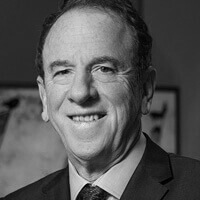
Host: John B. Quinn
Founder and chairman, Quinn Emanuel Urquhart & Sullivan
Share this episode:
Episode transcript:
Note: This transcript is generated from a recorded conversation and may contain errors or omissions. It has been edited for clarity but may not fully capture the original intent or context. For accurate interpretation, please refer to the original audio.
JOHN QUINN: This is John Quinn and this is Law, disrupted. You know, there’s an awful lot of talk about how AI is going to revolutionize the legal business. Lawyers are, after all, among other things, wordsmiths and, facially it looks one would think that large language models certainly have the potential. We know they can put words together in intelligible fashion and answer questions.
So a lot of people are asking me, aren’t large language models going to make you all obsolete, or at a minimum, completely restructure law firms. You’re not gonna need so many associates. So the structure of a law firm, instead of the pyramid, that one thinks of, and the way law firms have always been organized, it’s gonna be more like a column with maybe some bunch of tech people supporting some lawyers at the top.
My answer to that, to this point is I haven’t seen the beginning of a revolution, truly, in our business in terms of restructuring law firms, although certainly applications for mining data sets and the like, are extremely useful and speed some things up may have more application for deal lawyers and transactional practices.
These are the sort of really uneducated things that I say. When people ask me questions, and we have some people we’re talking to today who are going to be able to give us more educated answers, and we’re gonna be talking about an actual case, a trial where AI was used to great effect. And I’m looking forward to learning about how AI was used by trial lawyers to reach a spectacularly successful conclusion in a case.
So I’m talking with my partner Chris Kercher in our New York office and Jeff Chivers of Syllo AI and Syllo AI is the AI tool that Chris and his trial team used in a recent case, Desktop Metal versus Nano Dimension, which was a bet the company fight to salvage a $183 million all cash merger.
So let’s begin. First Chris, why don’t you set the stage, tell us about that case.
CHRISTOPHER KERCHER: Yeah, thanks John. So Desktop Metal is a 3D printing company in Boston that was agreed to be taken over by Nano Dimension last year. Between signing and closing Nano Dimension itself, the acquirer was taken over by an activist investor, at least the board was taken over and the activist investor ran on a campaign against the deal and against another deal that the company did. And so they came in and they started to slow walk the regulatory process, specifically CFIUS to try to time out the deal.
JOHN QUINN: Tell people what CFIUS is for, for those who don’t know.
CHRISTOPHER KERCHER: Yeah, it’s a public function. It has members from all the different executive branch offices, and it relates to foreign investment in the United States, the Committee on Foreign Investment in the United States, which reviews foreign acquirers. And here we had an Israeli acquirer buying a 3D printing company whose products go into military applications, nuclear subs, et cetera.
JOHN QUINN: You need CFIUS’s approval to do this deal.
CHRISTOPHER KERCHER: So the deal had a hell or high water commitment for the buyer to comply with the mitigation measures that CFIUS proposed. Okay. And so they were trying to time that out and renegotiate a better deal. QE got hired in January, and we were in trial by the first week of March.
JOHN QUINN: Okay. So, the company, the target company is dragging its feet to get this regulatory approval.
CHRISTOPHER KERCHER: It was the buyer.
JOHN QUINN: Yeah. And there was a drop dead date by which the deal had to be closed. And then we get hired on behalf of the buyer to try to do something about this situation.
CHRISTOPHER KERCHER: That’s right. That’s exactly right.
And so we brought suit in Delaware Chancery Court seeking specific performance.
JOHN QUINN: Right. So, Jeff, at what point, tell us first a little bit about Syllo AI and then we’re gonna get into what your involvement was in this case.
JEFF CHIVERS: Absolutely. And thanks, John. My background is computer science and then litigation, litigated for a number of years.
JOHN QUINN: You’re a lawyer, sir. You can admit it. We like lawyers on this podcast.
JEFF CHIVERS: Yeah. I am still a lawyer, still doing my CLEs every year. And we started the company, another lawyer and I coming out of the third circuit. We met together clerking in the third circuit and founded the company basically walking out of Judge Ambrose’s chambers in the third circuit in 2019.
Built inn stealth for about three years and started bringing the product into market in 2023 and got connected to Quinn Emanuel pretty early in bringing this product to market.
JOHN QUINN: What was your vision for this product?
JEFF CHIVERS: You know, I think the vision for the product is, you know, someone like Chris Kercher or a trial lawyer can just, command an army of AI to handle the nitty gritty stuff within the litigation and be able to just run an entire litigation with really good litigators and get cases to trial more quickly. More broadly, just improve the legal system because there’s a whole lot of transactional costs with respect to resolving disputes basically. And it was, it’s a really broad vision.
JOHN QUINN: But it was very much litigation focused as opposed to transactional law-focused.
JEFF CHIVERS: A hundred percent. It is entirely litigation focused and everything that we build is focused on the litigation domain.
So my co-founder, a Yale Law School grad, and I think that he connected with a Quinn lawyer that’s out of Yale Law School, and they got us connected to the right people within Quinn to share with them what we were building. And, you know, you’re, I think there was an attorney who was overseeing an e-discovery function and the current head of your rediscovery function thought it was really promising. And, uh, so they brought us in pretty early in a pilot program towards the end of 2023 and kind of just continued to build and improve since then.
JOHN QUINN: So, Desktop Metal, this case that Chris was describing that went to trial in Delaware, that’s not the first matter that we worked on together.
JEFF CHIVERS: It’s not, and there were other matters that were, but this was maybe the first trial.
JOHN QUINN: You were shoulder to shoulder with us.
JEFF CHIVERS: This was the first trial that was shoulder to shoulder. Okay. And I think I was in, Chris, I happened to be in your offices in mid-January. And the way, I mean the way that Chris described it was we just got hired in a case and it’s going to trial in March.
And I like, looked at my watch and I was like, you’ve been in like six weeks.
Yeah, in six weeks, and I think I asked, where are you in onboarding the case and said we started reviewing documents or taking any depositions. I was like, oh man, this is gonna be a ride. And I told Theo who runs our customers support function, basically. So I walked outta that and told Theo, I was like, so Theo, it looks like we’re gonna onboard a case that’s going to trial in six weeks.
JOHN QUINN: So Chris told you, Chris asked you, do you think you can help on this? And you said, I think we can.
JEFF CHIVERS: Absolutely. I said, this is what we were made to do.
JOHN QUINN: Okay, Chris, tell us, so everybody in the litigation world wants to hear about how you used AI to get this incredible result.
I mean, to steal the punch, the punchline here, Chris and his team achieved what most of the M&A world thought was impossible. That is to get an order specific performance that the seller had to close and had to do what was necessary to get the regulatory approval, which is remarkable. That’s a third party. The government’s not a party, but they’re ordered to go ahead and get that CFIUS approval. So, Chris, how did this play out?
CHRISTOPHER KERCHER: Yeah, thanks John. And, Jeff, I had forgotten about that, but you’re absolutely right. You right place, right time. That’s a good, marketing and sales tip for anyone.
As Jeff said, we had just gotten hired. We had a very short clock to work with. The drop dead date was the end of March, so we didn’t have a lot of time to let the trial date slip. We had to do everything we could to hit that trial date. No matter how onerous, abusive, over the top the requests were from the other side in discovery, we had to meet it because realistically, we didn’t have time to get to court, to, uh, you know, to get a protective order.
So we undertook a massive discovery. And it dawned on me, I had met Jeff a number of times, been really impressed by him and the team, that this was a great opportunity to both use their tool, but also might be the only way, because to assemble that number of people to review documents on such a short timeframe, and we had, you know, a week.
I think initially to get through tens of thousands of documents wasn’t feasible, and we continued to use AI right up until the trial and through the trial, you know, I’m not so sure that the introduction of AI is gonna reduce the number of lawyers. No other technology ever has, you know, the internet, you could imagine people thinking, oh, you know, we’re not gonna go to the library stacks anymore – what are associates gonna do? You know, the world finds things, so AI is a tool, it’s a weapon. And I think in the right hands of very skilled litigators, it’s a tool that is a force multiplier for your brain.
JOHN QUINN: Alright, well let’s get as specific as possible as to how you use this tool.
So, you know, we have in the audience litigators who are listening, they’re thinking here, Chris, I hear what you’re saying, but you know, look, there’s been automated ways of reviewing documents around for a long time. What’s so special about this? Tell us how you used it.
CHRISTOPHER KERCHER: Sure. So there’s two tools I’ll talk about.
One is Syllo, that’s Jeff’s platform, and the other one is Claude, which is a public large language model by Anthropic. We have an enterprise subscription so we don’t have to worry about confidentiality issues or data leakage. And so for Syllo, we used it to review these massive quantity of documents to tag them, to organize them to create a chronology, and also to prompt to ask for the documents that we wanted.
So if I wanted to see all the documents between the hedge fund that took over the board and the board members, you know, rather than running a bunch of searches and hoping you’d get it and having to sort through the wheat from the chaff, you just ask in plain English.
You prompt the system and it returns the documents. And so I use that. I know a number of my partners and teammates use that to prepare for depositions to, uh, get ready for trial.
JOHN QUINN: So, I can imagine a prompt would be, I wanna see any, documents that represent communications between the people in set X and the people in set Y during a specified timeframe, which referenced the following subjects.
CHRISTOPHER KERCHER: And that’s a great one. And that’s something though that I think traditional, you know, e-discovery has gotten decent at. So you can go a step further and you can say, I wanna see all the documents suggesting that the buyer was hesitating about going through with the deal or with slow walking CFIUS, you know, you give it the idea.
Yeah. And what was amazing about the product is it spits out the right documents that correspond to that idea. Right. Right.
JOHN QUINN: So in a sense, you’re saying the prompt in substance or effect, you know, I wanna make the case X wanna argue X, gimme all the documents that supports it.
CHRISTOPHER KERCHER: Yeah. And that’s what we did.
That’s exactly what we did. And then, in parallel, we used the Claude platform, like as a daily thought partner. So as new issues came up and they come up every day in these expedited cases, we could go into Claude and just start brainstorming, what are we missing here? What else should we be doing?
You know, help me think through 10 ways to argue this. Okay. I like actually like that idea. Let’s push on that a little bit more. Argue against it. You know, as I was writing the post-trial briefs or editing the post-trial briefs that our wonderful team did, you know, I get inspired with ideas for, interesting ideas for the preliminary statement, or there must be a better way to explain this story.
And so, using Claude, giving it the facts, giving it the context, and knowing how to prompt it to get actually unbelievable written work product that we could then insert in the brief or, you know, track changes in the brief. We used it, I used it to prepare for depositions.
You know, I have this document. I want you, Claude, to think through what are some ways that this fits into the overall case and what’s the most effective way for me to deploy it. You know, should I start with this question or should I hold this back? All those sorts of things that we kick around in our heads.
JOHN QUINN: That’s interesting. You’re asking it to exercise judgment as to whether you start with something or whether that should comes up later and hold up for a recross.
CHRISTOPHER KERCHER: Right? And, you know, look, there’s always gonna be the human in the loop because I didn’t keep track, but a decent number of times it would come back with suggestions that were implausible, not helpful, not very good.
But you can get instantaneous volume and so you start seeing a bunch of ideas you can pick from A and B and start to put it all together. And it really is, it’s like a lever for your mind.
JOHN QUINN: Yeah, I mean, I’ve used ChatGPT and, and I’ve used this kind of a check, so I’ll have my own ideas, which, so I will have created a line of questions or whatever, and then I’ll use it as a double check.
And see if ChatGPT comes up with something I hadn’t thought of. But it sounds like you really take this, you’ve taken it a step further.
CHRISTOPHER KERCHER: It’s really fun. Look, I think a lot of people, including myself, when I started playing around with these, including ChatGPT, sort of used it as a more advanced Google, right?
I’d ask questions, I have a question in mind, I get an answer. And then I started to realize that these things are really good at thinking. And so, and one of the things I’m excited about is we have now hundreds of people at Quinn using these, and I’m really excited to get it in the hands of our best communicators because I am certain that our smartest people, our best writers, our best communicators, once they understand that the audience here is an AI tool that can do stuff, they’ll be able to communicate really clearly what they want and get amazing results.
JOHN QUINN: I mean, did you, when you were using it to help you draft documents, did you, you know, ask it to try to change the tone? You know, this is what I’ve written. I like this, but can you make it more aggressive? Or tone it down a little.
CHRISTOPHER KERCHER: Yeah. All of those things. One of my favorite, tools to use is to tell it, to write like Kathleen Sullivan and I wanna argue this, you know, here are the arguments. Come up with a structure that Kathleen Sullivan would be proud of.
JOHN QUINN: Yeah. Kathleen Sullivan folks is a name partner. It was a retired name partner at our firm.
She was formerly Dean of the Stanford Law School. And unfortunately she’s retired. We miss her, but she was a fabulous appellate advocate and a great writer.
CHRISTOPHER KERCHER: Yeah. And so she can live on, because the AI remember, has been trained on everything ever written. So it knows who Kathleen is, it knows what she’s written it, you know, it has some understanding of her writing style.
But I think most importantly, it uses that as a signal for very high quality legal advocacy.
JOHN QUINN: So have somebody told me just this last week that they will use ChatGPT or Claude, or one other large language model to create something for them and then they’ll go to another language model and dump in what’s already been created and said, what am I missing?
So they’re trying having the other model check the first model Y.
CHRISTOPHER KERCHER: Yeah. I do that all the time. I mean, one of the things to think about is this AI, right, is a technology. It’s like electricity or, playing a musical instrument. There’s not like a one AI. Different models have different strengths and weaknesses and that’s why I’m encouraging people to play around with them because you start to learn what is it good at?
What is Google Gemini good at? What’s ChatGPT and you know their five models, what do each of them do and why would you use one over the other? What does Claude do well, and I start to have an intuition about that. So I very often will pitch an idea to one model, have another model revise it. Remember they’re all trained differently, so they’re coming at it from slightly different perspectives.
And then ultimately, you know, I usually think Claude is the best writer. So I’ll have Claude give me some final output. But it’s great. It’s great for emails. It’s, you know, if you wanna send someone a nice to, see you note, you can sort of dictate in, here are the things that we talked about, turn this into a follow-up email after the meeting I had last week, and it’ll do a nice job and save you a lot of time on like sentence construction and, and things like that.
JOHN QUINN: Yeah. So Jeff, were you embedded with the trial team? How this was happening.
JEFF CHIVERS: I mean, part of our team was directly supporting the trial team and all that comes with that, there were a lot of late nights and weekends to do a six or eight week.
JOHN QUINN: How many people from Syllo were involved in this trial?
JEFF CHIVERS: I think about four. It was mostly, you know, which is a pretty small number, when you think about the amount of work that was being done on the Quinn side. Right. It’s just part of the power of these tools is that four folks on our team using the tools really effectively, I think is, you know, it’s a different model of support. But that was pretty much what it was.
JOHN QUINN: Were you remote or were you on site with the trial team? We were remote. And how do you get compensated? Did, was there like a flat fee that we engaged you on or was it hourly or is that something that we shouldn’t be talking about in the public forum?
JEFF CHIVERS: Well, you, I don’t know how you edit these afterwards and whether this is gonna survive, but, you know, and that, I think it was, it’s based upon usage and some hours, but I prefer to do it on a flat rate personally. Because I feel like what you as a litigation team want, is you, you want outcomes to be achieved, and if we can do it with three people and really good skill around AI and the AI platform that we’ve built, then we can tell you a flat price and do it for that.
Not everybody likes that, but I prefer that when given the opportunity. And I think in this instance it was not that, and it was more about the usage and the hours, but they were just, you know, I think they weren’t as many hours as they otherwise would’ve been without using AI for that type of support.
JOHN QUINN: Is this the first case where you’ve actually been through a trial or you’ve been through trials before?
JEFF CHIVERS: As a lawyer, I had been through a couple of trials. No, but I mean no.
JOHN QUINN: No as a purveyor in AI program.
JEFF CHIVERS: As a purveyor, this was the first full blown trial.
JOHN QUINN: What did you learn?
Look, you created this tool, with a view to help in litigators and trial lawyers, and now you’ve actually been through a trial. What did you learn about your tool? Ways it can be enhanced applications and the like.
JEFF CHIVERS: We learned a few things. You know, there was a point in the case where the Quinn team wanted to do an analysis of the deficiencies in the other side’s production.
And so we, in a period of about 48 hours, made changes to our automated review tool to have it perform more of a deficiency analysis function in a way that’s less expensive than doing a full.
JOHN QUINN: Is this sort of like, tell me what documents seem to be missing or?
JEFF CHIVERS: Yeah, it’s, it’s kind of like, which, what did they not, you know, we asked them for these 35 categories of documents, which ones did they give us a zero or close to a zero on and which ones did? Are there glaring omissions? And they, the Quinn team used that and I think was very happy with what it got them insights into in terms of what they were able to demand and follow up requests. That’s interesting.
CHRISTOPHER KERCHER: I was gonna say, John, this again, remember super expedited case.
We can’t let the deadline slip at all. The adversary doesn’t have a great case, so they’re running a war of attrition. They’re bombarding us with requests. They’re trying to trip an interim operating covenant. And the whole time they’re holding, you know, they’re holding back the key documents.
So we filed four motions to compel in this case unbelievably fast. The day after we got the other side’s privilege log, we had a motion on file, challenging it and challenging the way that they must have been astonished. They must have been blown away. They had exhausted. Yeah, I think, look, I think in any other situation, they, I mean, every night at 11:30 I would get some discovery email from the other side that would go on and on and, you know, at that point, after six weeks, your brain is tired.
You can’t figure it out. But with AI tools, you know, suddenly I got a second wind and could, we could, you know, we could deal with everything that on the day and keep things moving and that was critical.
JOHN QUINN: Well, I’m guessing that the use of AI was asymmetric here. I mean, you had AI and did it, did you have any, was there any clue that the other side had capability like this or it was obvious they didn’t?
CHRISTOPHER KERCHER: I’ll share a funny story. I don’t know the, actually the chairman, so the adversary, the business adversary on the other side did use AI. This came up in his testimony when Burke was cross-examining him, and one of the things that came out was that they were recommended two law firms to talk to about doing this case, Paul Weiss, who they hired and us, and they didn’t go with us.
And the guy came up to me afterwards, the witness, the chairman, the other side, to tell me that he actually asked Google Gemini who to hire for a Delaware case, Quinn or Paul Weiss. And it said Paul Weiss. And I said, well, is it recent? Maybe it’s using bad data. You know, we have a Delaware office now, they’ve been doing pretty well. And he told me that during witness prep when he tried to show Paul Weiss this time it came back, Quinn Emanuel, which I thought was pretty funny.
JOHN QUINN: Yeah, that’s funny. Well, I’m sure it’s definitely saying, it’s a good evaluation. Yeah.
JEFF CHIVERS: The privilege analysis that Chris described, actually that was another enhancement we made based upon the demands that arose in this case where, you know, the ask was, can you identify which of these privileged logs, entries looks weak and, or appears to be weak based upon the data that we have in this case.
JOHN QUINN: Wow, that’s a query that really requires some judgment. A legal judgment.
JEFF CHIVERS: Yes. And so that was another one where we worked with a couple of folks at Quinn and put something together and then ran it. And of course that’s not the end of the story, right? Somebody at Quinn absolutely reviewed the output and considered which of those, but it got them from a very long privilege log to maybe 200 or 300 entry.
I don’t remember exactly. That had specific reasons the AI had identified might be worth challenging. And then, you know, the Quinn attorney can exercise their expert judgment over that, a much more refined set.
JOHN QUINN: So Jeff, what is it about this particular model, its architecture or its features that is customized for litigation or that makes it so effective for a litigation application?
JEFF CHIVERS: So part of it actually goes to what Chris was describing, what you were talking about with respect to considering different models and getting familiar with what they’re good at and what they’re not good at. Underneath the hood of Syllo, we have access to all of those models, and we’ve written custom pipelines that we can use.
All of those models, a few of those models, multiple of those models in concert, they can vote on different things. One model puts together the first draft, another model criticizes it, a third model redrafts it. So we can do all that sort of under the hood, which is really motivated by, I think the same thing that Chris was describing.
And so part of what’s going on underneath Syllo when a lawyer puts in something they’re looking for is that the system is triaging. What kind of problem is this? Which model’s good at this type of problem? Which model’s good at judging this type of problem and doing all of that underneath the hood?
And the other, I think, aspect of it is the domain expertise and domain modeling, which goes down the road of sort of what are the mental models that lawyers use to exercise their expert judgment? You know, when a lawyer is considering whether a document is gonna be useful in the case or relevant in the case, what is the mental model that they’re using to do that?
And we basically attempt to replicate that underneath the hood, and it’s not as good as a lawyer, to be clear. And so, you know, to your initial opening John, you know, it’s not as good as a lawyer, but it is better than asking a general purpose language model to, you know, analyze whether this document is relevant to my case and why.
And so you sort of infuse the language model with this mental apparatus that’s more domain specific to how the mental models that lawyers use. And then you add to that sort of multi-paradigm that I described, and what you get is, in our experience and what lawyers you’re telling us, what you get is a lot more accurate output.
JOHN QUINN: How do you identify and structure in terms of, you know, software, what you call the mental, I’m putting this in quotes, I’m using air quotes here, the mental models that lawyers use. How does that get translated into, you know, Xs and Os?
JEFF CHIVERS: So the term is, one term is knowledge representation. The other term is ontological engineering. These are a couple terms out of the computer science field that kind of get brought to bear in terms of trying to model how lawyers think.
JOHN QUINN: Ways of thinking.
JEFF CHIVERS: Yeah, ways of thinking. And in fact, the name of our company is Syllo, which is a reference to syllogism.
And if you think about all the different types of syllogisms that exist, you know, depending upon how you count them, they’re 8 or 16 or 24 depending upon which ones you count as distinct. And there are different ways of reasoning. And if you think of putting together a taxonomy of formal reasoning, you would be able to come up with a different type of list.
And so we have done that, you know, at different stages in our company’s lifecycle. We have literally modeled out all the formal ways of reasoning, all the ways of doing a syllogism, all the ways that lawyers do their reasoning, and then thought through how do you model that and put that in the background of this system that can also use language models to do what they’re good at, which is, like you said, you know, they’re extremely good at putting together a sentence in an intelligible way, but if you let them put together enough sentences, they’re gonna say something that is totally nonsensical. Right. So you kind of blend those two paradigms together and what you get is something that’s much closer to what the lawyers want.
JOHN QUINN: So based upon your experience in this trial, having gone through the first trial with your product, are you gonna tweak it in some ways?
JEFF CHIVERS: Absolutely. I think that one of the things we learned is that, so we already, we’ve already started to, and in terms of the deficiency analysis that I described and the, the privilege, scrutinizing privilege log scrutinizing.
And I think that we’ve also learned from Chris and others that we can make the product a lot more usable in terms of being able to just dive in and ask questions and leverage all this structure, all this structured knowledge that the system is generating, but leverage it in a way that’s easier to digest for someone in Chris’s seat.
I think that was probably the biggest thing that we learned. And I, you know, there were four people on Syllo who were supporting the team, and there were times that what the team needed, we knew exactly how to do it really quickly on the platform, but it was gonna take too long to train them how to do it.
So we found ourselves doing more than we really want to. And so a lot of what came out of it was learning about how do we get it to the point where Chris, when he has that need, or when one of his associates has that need, we need to make it really easy for them to leverage the leverage, the toolkit.
JOHN QUINN: Chris you’re not gonna do a trial again without using AI?
CHRISTOPHER KERCHER: I hope not. You know, it’s like asking to do it without the internet or without a notebook. It, you know, now that I know how to use it, and I, you know, as you know, I’ve been using it for a couple years now, I learn more every day about what you can do on, on AI systems, and they get more advanced every day.
JOHN QUINN: I mean, I can foresee see a time when it’s gonna be malpractice not to use this capability.
CHRISTOPHER KERCHER: I think so too. Look, right now I get a draft from an associate and it’s good, but you know, there’s repetition, there’s paragraphs that are unclear. I can just give that to Claude and give it a very simple prompt. Make this clear and persuasive and it’ll transform those paragraphs. Make this real, make this better, and you’d be amazed at that simple little tweak.
Suddenly now I have something I can work with and ingest, you know, more substantive comments. So I think, you know, is it best practice? I think young lawyers should get in the habit just like they are with spell check of running it through a good language model to make sure they’re not missing anything, to make sure that it’s clear, not repetitive, and, you know, suitable for someone else to work with.
JOHN QUINN: Well, it’s been a fascinating conversation. Anything else that we haven’t touched, touched on that you think the audience might be interested in hearing or good for people to know?
CHRISTOPHER KERCHER: I would encourage everyone, especially Quinn Emanuel, to start playing around with these models. I think it’s going to be a skill, learning how to use them.
JOHN QUINN: We don’t want our adversaries to do this, right?
CHRISTOPHER KERCHER: They’re way behind. I’m not, I’m not worried. You just come talk to me, start playing around with it and you know, exploring how you can use it. I think. You’ll just be a lot happier. And everyone who I’ve gotten into it has found that there are definitely things they can use it for every day.
JEFF CHIVERS: If I could, you know, just at the beginning, John, in your opening you noted that you’re not seeing a move from the pyramid to more of a straight line sort of structure. And I’m not seeing it either. And what I’m seeing is that lawyers really are spending more time on the strategic parts of the litigation.
And what AI gets them to is speed to insight and then speed to pivot. And I say speed to pivot because in my experience as a litigator, and then on now on this side, it’s like in a complex litigation, there are always pivots. It’s not like it happens some of the time. It happens all the time, and it might happen 10, 15 times and in the Desktop Metal case it happened multiple times in a span of weeks.
But in any case, you know, speed to pivot. I think that’s the promise of what AI can do is like speed to insights, speed to pivot. You’re gonna end up spending the same amount of time, but where you land is a much better compelling case.
JOHN QUINN: Thank you gentlemen. Interesting conversation. We’ve been speaking with Chris Kercher, my partner at Quinn Emanuel and Jeff Shivers of Syllo AI about the use of AI at trial. This is John Quinn. This has been Law, disrupted.
Thank you for listening to Law, disrupted with me, John Quinn. If you enjoyed the show, please subscribe and leave a rating and review on your chosen podcast app. To stay up to date with the latest episodes you can sign up for email alerts at our website, law-disrupted fm, or follow me on X at JB Q Law or at Quinn Emanuel.
Thank you for tuning in.
Published: Nov 13 2025